
Ever notice your students lifting their elbows way up while cutting with scissors? Or twisting the scissors instead of turning the paper? When looking at scissor skills, occupational therapists often notice a widened elbow or a lack of a thumbs-up position when using scissors. This positioning is often a sign that a child is compensating for limited stability, which can make cutting harder and more tiring.
You’re not alone. These are very common scissor skill challenges, especially for younger students or those still developing fine motor control. The good news? There’s an easy occupational therapy trick you can try that helps students build better habits right away—no special tools required.
The Paper-Under-the-Arm Scissor Challenge
Here’s a quick challenge to try during your next cutting activity:
Have students tuck a piece of paper under their dominant arm—the same arm holding the scissors.
The goal? Keep the paper under the arm in place while cutting or snipping.
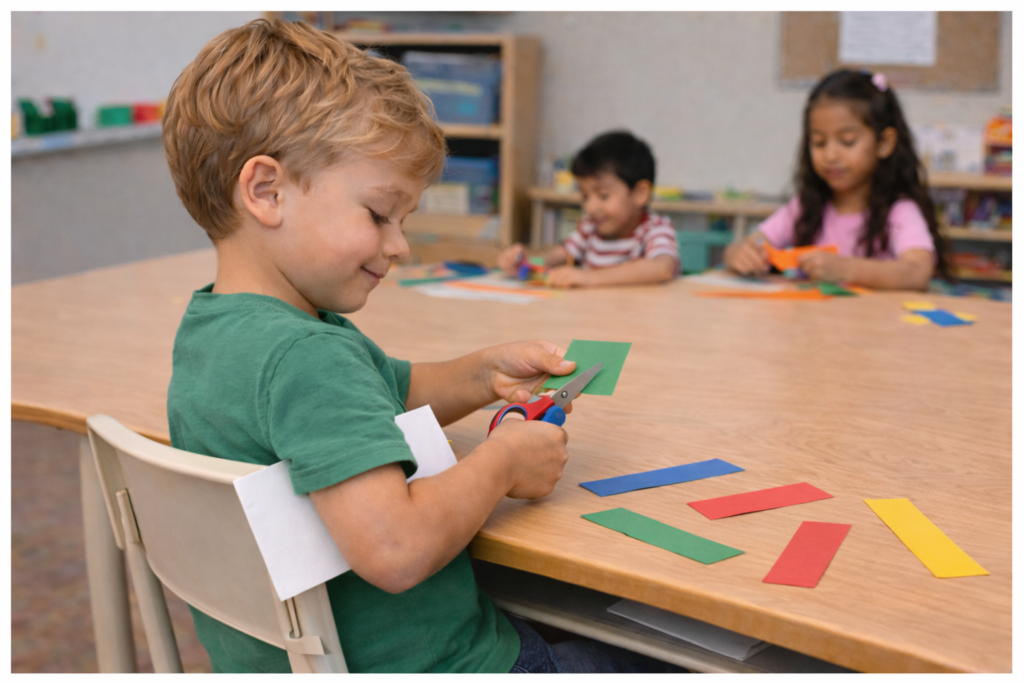
This simple setup gives students instant feedback. If their elbow starts to lift or drift away from their body, the paper falls out. When they keep their arm close to their side, the paper stays put. Having them stand while cutting can also help. This way they turn the paper with their helping hand, not turn the scissors.
Why This Works
Keeping the cutting arm close to the body helps:
- Improve overall control and stability
- Reduce fatigue in the shoulder and arm
- Encourage smoother, more efficient cutting motions
It’s a gentle reminder that doesn’t feel corrective—and kids usually think it’s fun.
Don’t Forget the Helper Hand
Once students get the hang of keeping their cutting arm steady, encourage them to focus on what their helper hand is doing.
Instead of twisting or turning the scissors, remind students to:
- Turn the paper with their helper hand
- Keep the scissors facing forward
This shift alone can make a big difference in cutting accuracy and confidence.
Add a Fun Bonus Challenge
For an extra layer of control, try this:
Challenge students to only have one piece of paper to throw away when they’re finished cutting out shapes or images on worksheets.
This promotes:
- Fewer snips
- Smoother cuts
- Staying closer to the cutting line
I often use this when I push into classrooms, and students love the friendly competition. It turns practice into a game while still reinforcing important motor skills.
Practicing Snipping Skills: Simple Scissor Activities That Work
These activities keep the focus on the skill itself—opening and closing the scissors—without overcomplicating things. Once kids have that foundation, everything else comes much more naturally.
- Snip Play-Doh or putty logs to build hand strength and introduce opening/closing the scissors
- Cut short paper strips to practice controlled snips
- Snip index cards or cardstock strips for extra stability and feedback
- Cut across paper with no lines, focusing on stopping at the edge
- Snip straws, yarn, or fringe paper for quick success and repetition
- Make simple crafts (sun rays, grass, hair, confetti pictures) that only require snipping
- Practice snip and drop activities (cut and place pieces into a cup or container)
Want More Ways to Build Scissor Skills?
If you’re looking for easy, no-prep ways to work on cutting skills, I have a variety of print-and-go scissor activities in my store. These resources help students practice cutting along lines, shapes, and curves while strengthening fine motor coordination and confidence.
They work well for:
- Small groups
- Morning work
- Classroom centers
- Occupational therapy sessions
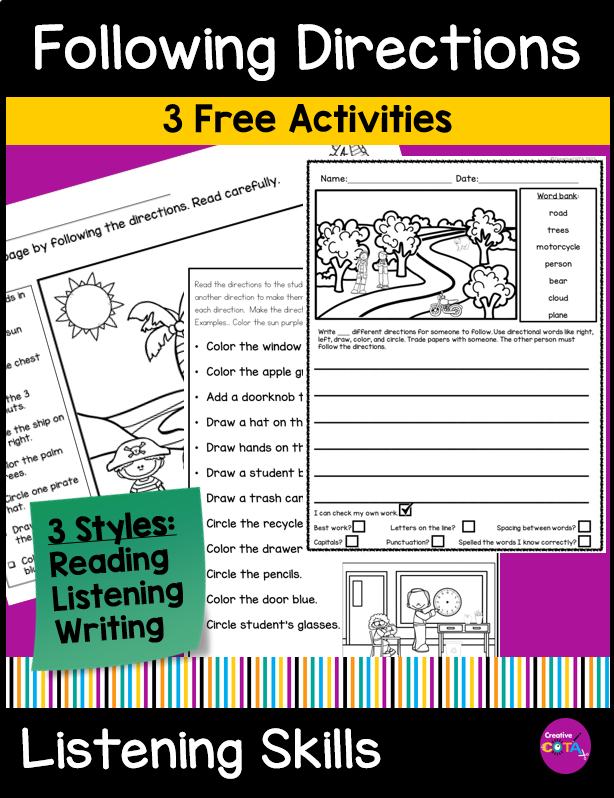
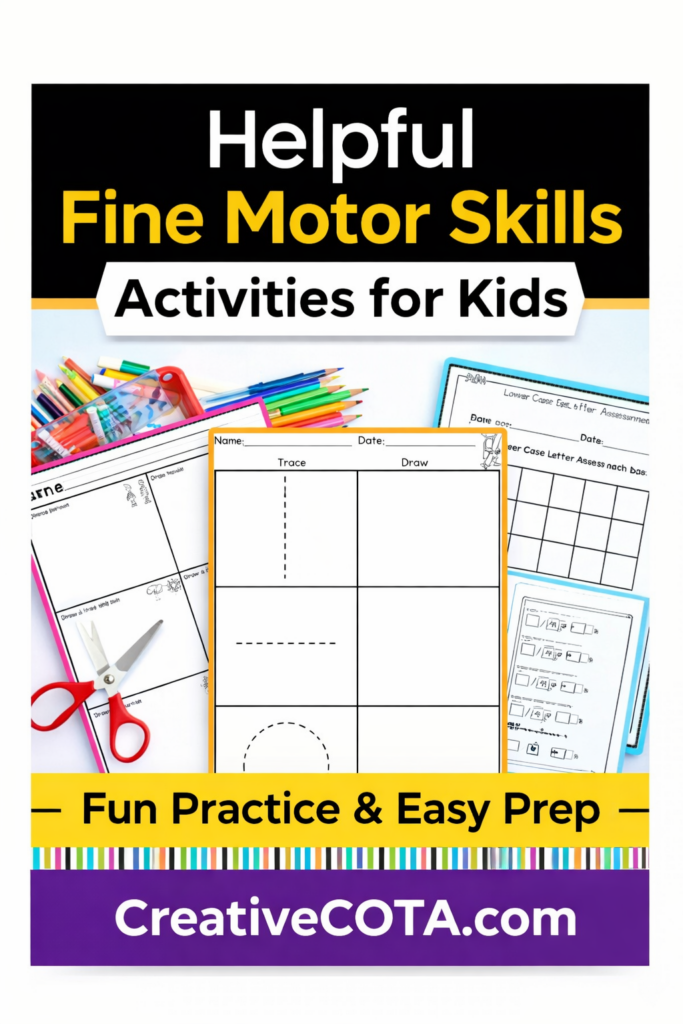
If you are looking for a way to monitor progress on these skills, check out this resource in my TpT store:

About the Author
I am a Certified Occupational Therapy Assistant (COTA) and have been working in a public school system for more than 25 years. My resources can be found on TPT, BOOM Learning, Made by Teachers, Classful, and Your Therapy Source. I appreciate your interest wherever you wish to shop.
I also now have workbooks on Amazon.
My mission is to help you find creative ideas to incorporate fine motor, visual perception, gross motor, and social-emotional learning into your lessons.
I hope you consider signing up for my Free Resource Library with your Email. I send out emails about once a week and share resources, tips, and planning ideas for your classroom or occupational therapy needs. Hopefully, these help your students work on building their skills in a fun and engaging way.
Thank you for your interest in my resources and ideas. I hope you will consider following my journey on TPT or wherever you wish to shop.
This post contains affiliate links. If you use a link and make a purchase, I may receive a small commission at no cost to you.