
Check out my printed workbooks ➡︎ SHOP AMAZON

Category: Classroom Management Tips

Shop My Favorite Occupational Therapy Tools and Classroom Finds

I’m an occupational therapy assistant who spends my days supporting students, problem-solving, adapting activities, and finding tools that help children participate more successfully in school and everyday activities.

As an Amazon Associate, having a storefront simply gives me one convenient place to share products I already use and recommend.

Instead of searching through old blog posts, emails, or social media comments, you can now browse my favorite tools in organized collections.

Read More »
3 boys playing with duplo blocks at a table in a classroom

You Know You’re Neurodiversity-Affirming Classroom Teacher When…A School Occupational Therapy Perspective

In today’s schools, more educators and therapists are working to create neurodiversity-affirming classrooms. This means we respect different nervous systems, learning styles, and ways of communicating. Instead of trying to make every child fit one mold, we adjust supports, tools, and environments so all students can succeed.

As a school occupational therapy practitioner or classroom teacher, this mindset shows up in small, everyday decisions. It affects how we view behavior, writing, fine motor skills, and sensory regulation in the classroom.

Read More »

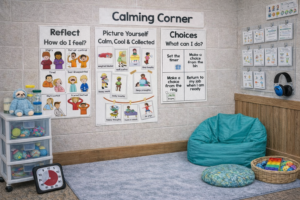
Why Every Classroom Needs a Calming Corner This Year

As you start setting up your classroom for a new school year, there’s a lot to think about: seating arrangements, supply labels, bulletin boards, and the flow of daily routines. But one area that often makes a huge difference—and is sometimes overlooked—is the calm-down corner.

More than just a cozy space, a calming corner can be a game-changer for classroom management, emotional regulation, and student well-being.

Read More »

Understanding and Teachting Interoception: A Key to Emotional Awareness and Regulation

Have you ever noticed how your heart races when you’re nervous or how your stomach feels tight when you’re anxious? These are examples of interoception—the ability to sense internal bodily signals. Interoception plays a crucial role in emotional regulation, self-awareness, and overall well-being, yet it’s a skill often overlooked in traditional education and therapy settings. For parents, teachers, and therapists, and understanding interoception can unlock new ways to support children, especially those with sensory processing differences or autism.

Read More »

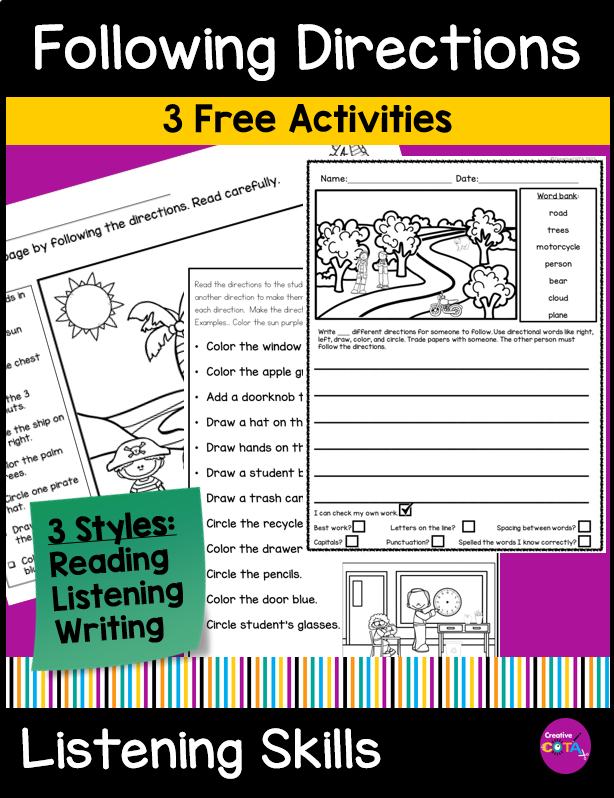
Free Following Directions Activity

Get this free Follow the Directions resource and access to so many more worksheets and activities

Free Following Directions Activity

Get this free Follow the Directions resource and access to so many more worksheets and activities