In today’s schools, more educators and therapists are working to create neurodiversity-affirming classrooms. This means we respect different nervous systems, learning styles, and ways of communicating. Instead of trying to make every child fit one mold, we adjust supports, tools, and environments so all students can succeed. But how do you know if you are neurodiversity affirming?
You’re being neurodiversity-affirming when you respect that every brain works differently and you support people as they are, instead of trying to make them seem more “typical.”
It shows up when you focus on strengths, adjust the environment to reduce barriers, and help individuals learn, communicate, and participate in ways that feel safe, comfortable, and natural for them.
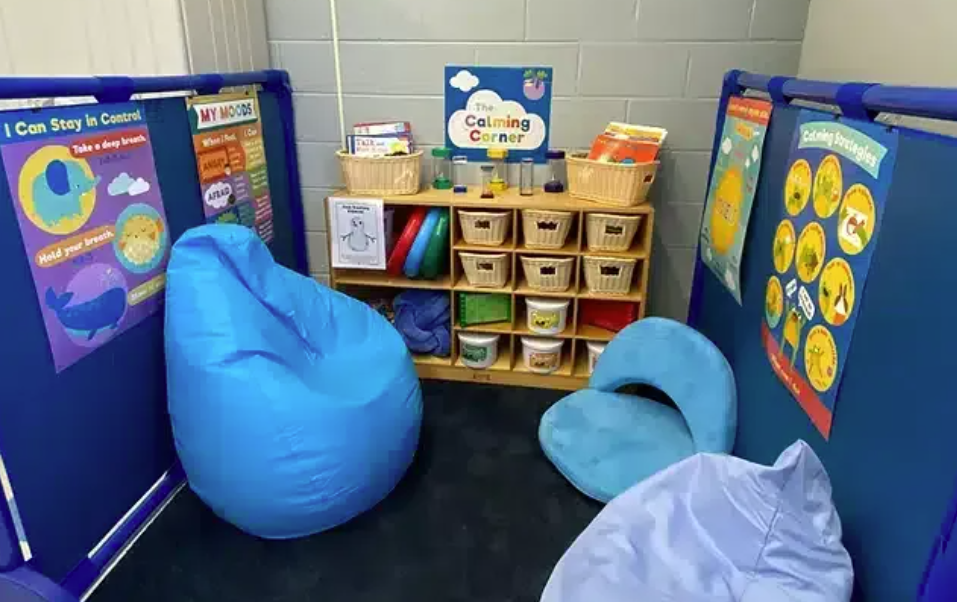
If they want to work under your desk or in a cozy corner, is that ok? How about sitting on the rug as opposed to working at a desk?
As a school occupational therapy practitioner or classroom teacher, this mindset shows up in small, everyday decisions. It affects how we view behavior, writing, fine motor skills, play, and sensory regulation in the classroom.
Below are simple, relatable examples that show what being neurodiversity-affirming in schools really looks like.
Neurodiversity-Affirming Mindset in Schools
You know you’re neurodiversity-affirming when…
- You hear “noncompliant” and wonder what the student might be communicating.
- You’d rather change the environment than try to change the child.
- You celebrate a student asking for a break just as much as finishing an assignment.
- You see movement as a need, not a problem.
- You focus on safety, connection, and regulation before academics.
- You value autonomy over simple compliance.
- You understand that behavior is communication.
- You look for strengths just as much as challenges.
This shift in thinking is at the heart of inclusive education and school-based occupational therapy.
Writing Doesn’t Have to Mean Pencil and Paper
You know you’re neurodiversity-affirming when…
- “Won’t/can’t write” makes you reach for tools, not take their hand and help them trace.
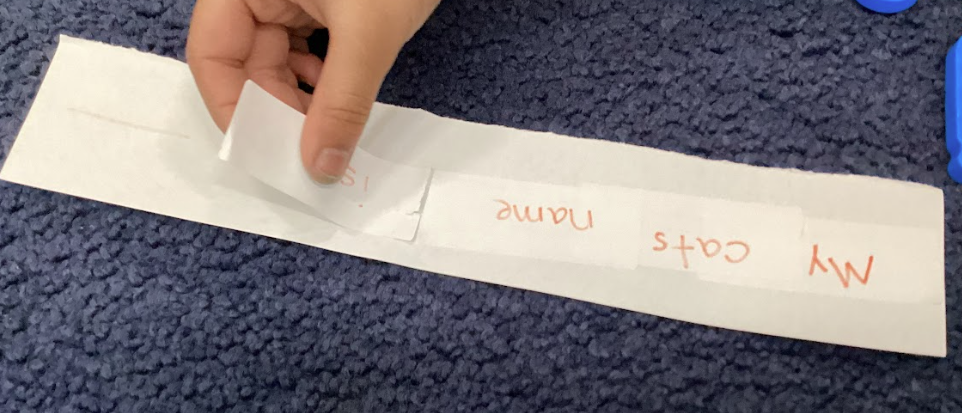
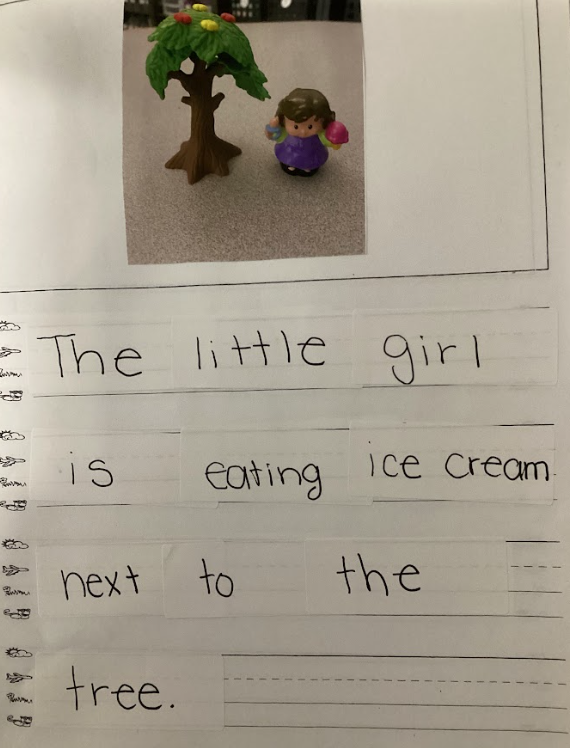
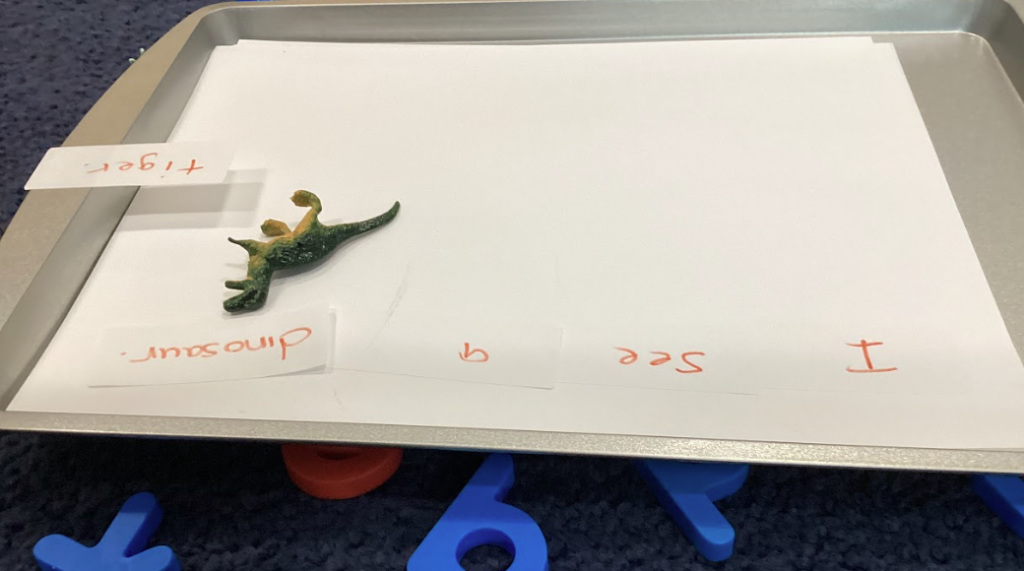
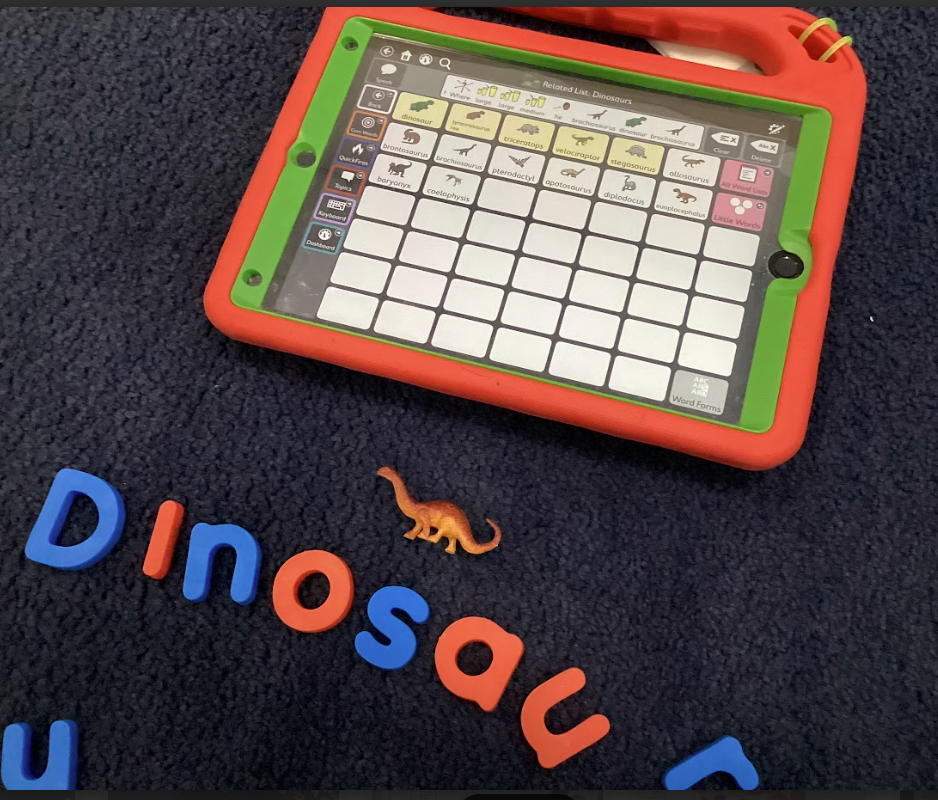
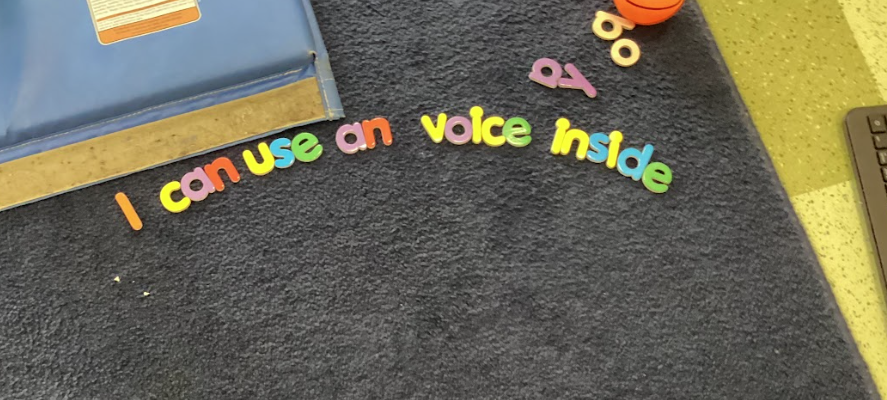
- Using Magnet or puzzle letters count as writing.
- Using stickers or address labels to write a sentence feels like a win.
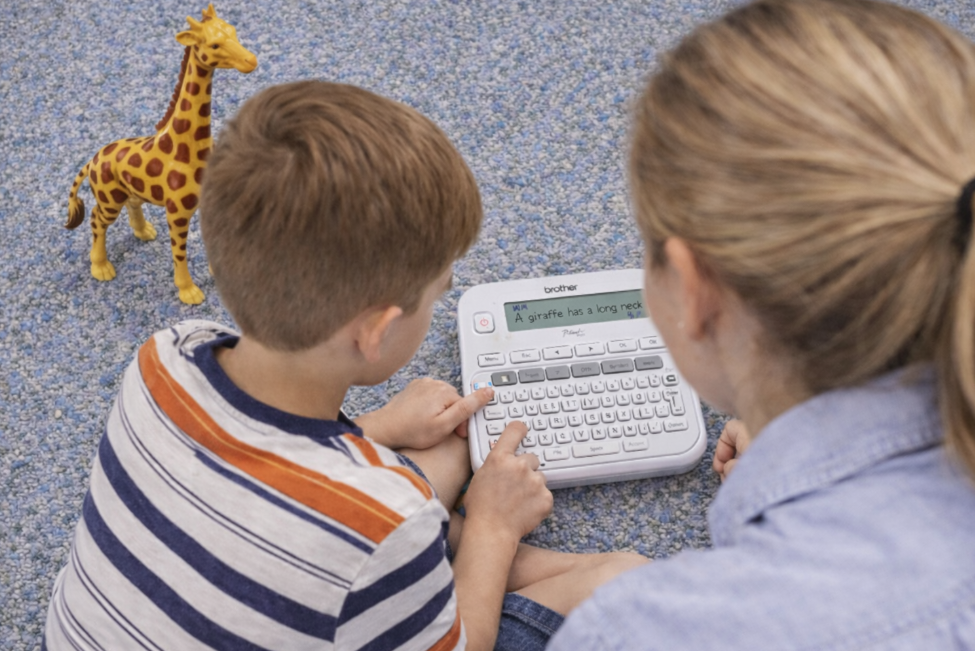
- A label maker becomes a literacy tool.
- Typing, stamping, oral storytelling, or building words in any way all count as writing.
- You care more about the student’s ideas than the tool they use.
- You’d rather reduce the motor load than reduce the child’s voice.
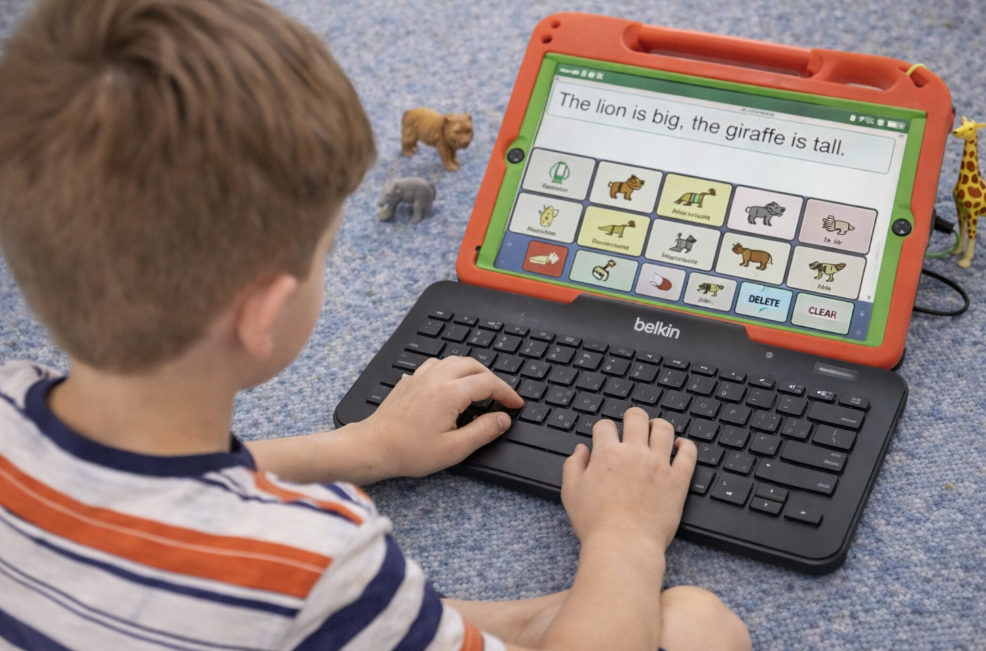
- Bluetooth and external keyboards are a go-to for iPads and AAC devices.
- You believe expression comes first, and the format can be flexible.
This is a key part of writing accommodations and accessible literacy supports in the classroom.
Watching a non-speaking kindergarten student use letters to write a full, well-spaced sentence independently, guided only by a familiar classroom visual, proves that when we provide alternative pencils and AAC supports, students can show us skills that speech and traditional pencils alone might never reveal.
Fine Motor Support the Neurodiversity-Affirming Way
Fine motor development is important, but it doesn’t have to look like endless worksheets. Students build hand strength, coordination, and endurance through meaningful activities and play.
You know you’re neurodiversity-affirming when…
- Messy work doesn’t bother you if learning is there.
- You strengthen hands through play, not just paper tasks.
- Tweezers, putty, and hole punches count as skill-building.
- You notice hand fatigue before you focus on messy handwriting.
- A chunky crayon is an accommodation, not “babyish.”
- You celebrate improved endurance, not just neatness.
- You understand that core strength and shoulder stability affect handwriting.
- You offer tools before correcting a grip.
- You use hand-under-hand support and never move/touch a child’s body without their consent. They move your hands.
This approach supports fine motor skills while protecting confidence and self-esteem.
Authentic Play Is Learning
In neurodiversity-affirming classrooms and therapy spaces, play does not have to look typical to be meaningful. When we allow children to engage with their own interests, whether that’s lining up animals, repeating the same game, spinning wheels, sorting, talking about trains or dinosaurs for the hundredth time, we are not “losing instructional time.” We are building regulation, trust, communication, and connection.
For many students, especially autistic and non-speaking AAC users, authentic, child-led play is where the nervous system feels safe enough to learn. When we join their play instead of redirecting it, we show them that their interests matter. That connection becomes the doorway to language, literacy, and social growth.
Instead of asking, “How do I make this play more functional?” we can ask,
“How can I enter their world and build learning from what already brings them joy?”
Following a child’s interests is not lowering expectations. It is building a bridge strong enough to carry them toward new skills.
You Know You’re Neurodiversity-Affirming When…
- Play doesn’t have to look typical to be meaningful.
- You join their play before you try to change it.
- A child’s deep interest becomes your doorway to connection.
- You see play as regulation, communication, and joy, not just a break from learning.
- You protect time for child-led play, even when the schedule feels tight.
- You use their favorite topics as bridges to literacy and learning. (Just be careful not to overuse them and take the joy out of their favorites.)
- You allow a child to play by themselves when they need that time to regulate and restore their balanced state.
Authentic, freely chosen play builds regulation and joy.
Solitary parallel play with peers in their own way is ok. Maybe just sharing a blue block when asked is a win!

Sensory and Regulation Supports in the Classroom
Sensory and regulation needs affect attention, behavior, and learning. Neurodiversity-affirming practice recognizes that students are not being “difficult”, their nervous systems may be overwhelmed or under-supported.
You know you’re neurodiversity-affirming when…
- You think about the nervous system before the behavior.
- Movement breaks are built into the day, not earned.
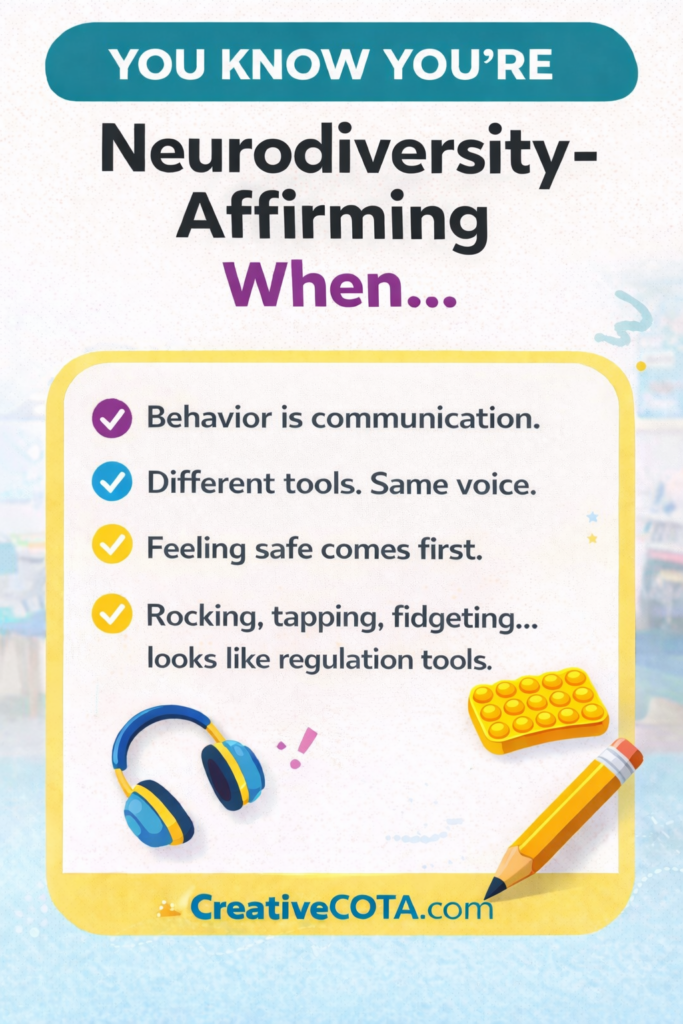
- Fidgets, rocking, or tapping look like regulation tools.
- Headphones for noise cancellation or music are seen as learning supports, not special privileges.
- You adjust the lighting and noise before giving more reminders.
- A quiet corner is a support, not a consequence.
- Feeling safe comes before following directions.
- When you see a student keeping their coat on or hood up as a regulation strategy, not a behavior to correct.
These strategies are central to sensory regulation in the classroom and school occupational therapy supports.
Final Thoughts
Being neurodiversity-affirming in schools isn’t about lowering expectations. It’s about removing and adjusting barriers so students can participate, communicate, and learn in ways that work for their bodies and brains.
Sometimes that means using magnet letters instead of a pencil.
Sometimes it means a movement break instead of a behavior chart.
Sometimes it simply means pausing and asking,
“What does this nervous system need right now?”
Regulation builds connection. Connection builds learning.
That small shift can change everything for a child.

About the Author
I am a Certified Occupational Therapy Assistant (COTA) and have been working in a public school system for more than 25 years. My resources can be found on TPT, BOOM Learning, Made by Teachers, Classful, and Your Therapy Source. I appreciate your interest, wherever you wish to shop.
I also now have workbooks on Amazon.
My mission is to help you find creative ideas to incorporate fine motor, visual perception, gross motor, and social-emotional learning into your lessons.
I hope you consider signing up for my Free Resource Library with your Email. I send out emails about once a week and share resources, tips, and planning ideas for your classroom or occupational therapy needs. Hopefully, these help your students work on building their skills in a fun and engaging way.
Thank you for your interest in my resources and ideas. I hope you will consider following my journey on TPT or wherever you wish to shop.
This post contains affiliate links. If you use a link and make a purchase, I may receive a small commission at no cost to you.