
Following directions and listening skills are essential for strong reading comprehension—and they’re teachable! Whether you’re a parent, teacher, or therapist, helping children improve their ability to listen carefully and follow spoken or written directions can directly support their reading success. These skills are foundational for academic achievement and are especially important for neurodiverse learners, students with ADHD, or those receiving speech-language or occupational therapy services.
In this post, you’ll find fun, effective ways to build listening and direction-following skills, along with simple activities you can try at home, in small groups, or in your classroom. These ideas will make practice feel like play—while laying the groundwork for improved reading comprehension and classroom participation.
How Following Directions Builds Strong Reading Comprehension
Listening and following directions are more than just good classroom behavior—they’re essential skills that support early reading comprehension. Whether a child is working on reading independently or understanding spoken instructions, the ability to process information, stay focused, and act accordingly plays a big role in learning success.
For children in kindergarten or grade 1, reading comprehension begins long before they can read full sentences. It starts with listening carefully, holding onto details, and following simple instructions.
Why Some Kids Struggle with Listening and Directions
Some children have difficulty following directions due to:
- Limited attention span
- Language processing challenges
- Auditory memory delays
- Overstimulation or distractions
- Difficulty with sequencing or left/right concepts
These challenges are common among neurodiverse learners and those receiving speech-language or occupational therapy support. The good news? These are skills you can build over time—with consistency and creativity.
Fun Activities to Practice Listening and Following Directions
“Do What I Say, Not What I Do” Game
This classic twist builds impulse control and attention. Give silly or contradictory instructions:
- “Touch your nose while I touch my ear.”
- “Stand up—unless I’m sitting down!”
Kids love the challenge, and it trains them to listen carefully before acting.
Color-by-Directions Pages
Give instructions one step at a time:
- “Color the circle red.”
- “Then color the square to the left of the circle green.”
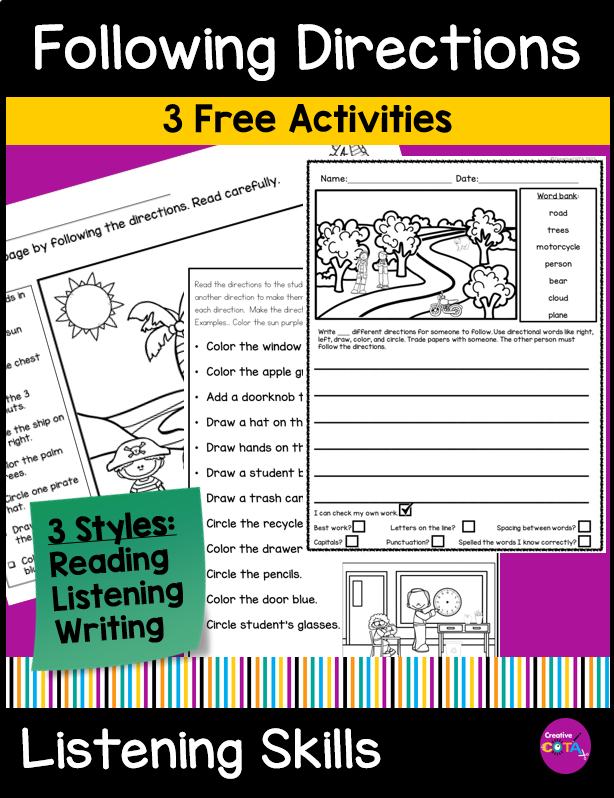
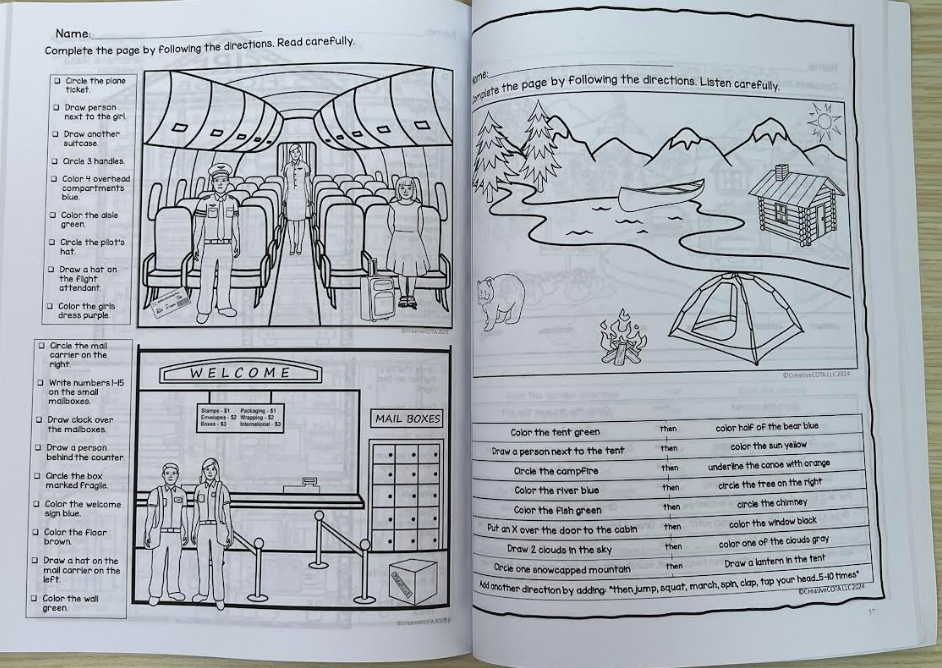
This reinforces directionality, color words, and sequencing—all key parts of understanding directions in reading tasks. This fun and easy-to-use workbook helps children in kindergarten and first grade improve listening, reading comprehension, and single and multi-step direction-following skills through 130 themed activities.
Simon Says with a Literacy Twist
Use “Simon Says” to practice action words, positional concepts, and left/right:
- “Simon says hop to the left of the rug.”
- “Simon says point to something that starts with ‘B.’”
You’re building vocabulary, auditory memory, and motor planning in one fun game.
Story Listening Challenge
After reading a short story or paragraph aloud, ask your child to:
- Act out what happened
- Draw the steps in order
- Answer simple questions like “What happened first?”
This boosts auditory comprehension and prepares them for story sequencing tasks in reading.
Everyday Tips for Parents and Teachers
- Use visual supports when giving directions (point, model, or show a picture).
- Break tasks into smaller steps and repeat them calmly.
- Use consistent language for direction words (e.g., always say “to your left”).
- Encourage self-checking (“What was the first thing I needed to do?”).
- Give children time to process before repeating instructions.
Want Ready-to-Use Activities That Build These Skills?
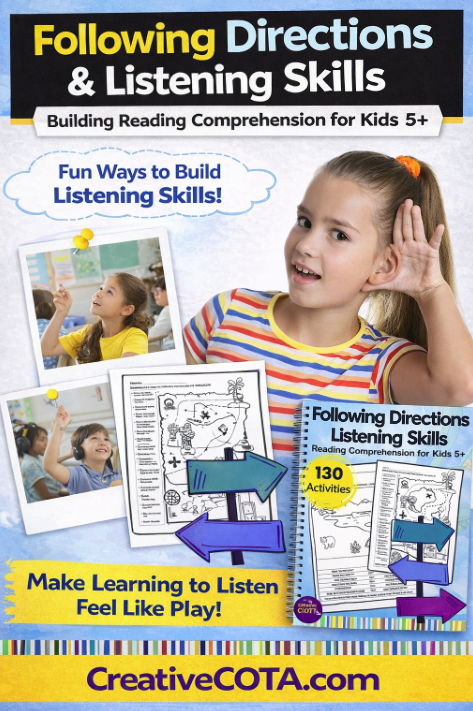
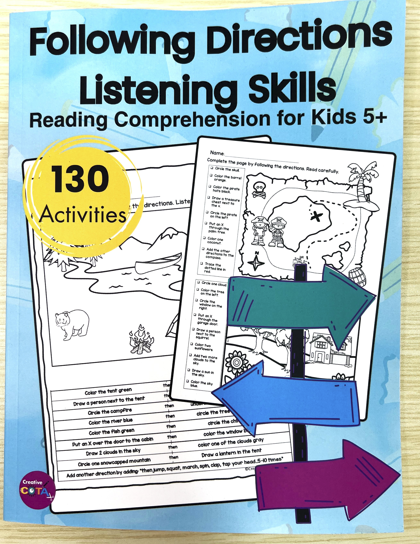
If you’re looking for an easy way to practice these skills, I’ve created a listening and following directions workbook with 130 activities. It’s designed to help young children build early reading comprehension, understand directions, and practice both one-step and multi-step instructions.
Themes include fall, winter, spring, and summer—as well as fun topics like:
- Halloween, Thanksgiving, Christmas, New Year’s, and Valentine’s Day
- St. Patrick’s Day, Easter, Earth Day, and April Fool’s Day
- 4th of July, Father’s Day, Groundhog Day, and Chinese New Year
- Back to school, community helpers, and more
This workbook can be used for:
- Reading comprehension activities in kindergarten or grade 1
- Following directions and listening skills in therapy or at home
- Supporting neurodiverse learners in small groups or whole class
👉 You can check it out on Amazon if you’re looking for something all ready to go.
Final Thought
Whether you’re a parent, teacher, or caregiver, building listening and following directions skills helps children feel more confident and ready to learn. Keep it playful, stay consistent, and remember—these skills take time, but every small step makes a big difference.
New edition: I recently added a preschool version. Check out the larger coloring pages and directions that can be read by an adult or older peer or sibling.


About the Author
I am a Certified Occupational Therapy Assistant (COTA) and have been working in a public school system for more than 25 years. My resources can be found on TPT, BOOM Learning, Made by Teachers, Classful, and Your Therapy Source. I appreciate your interest wherever you wish to shop.
I also now have workbooks on Amazon.
My mission is to help you find creative ideas to incorporate fine motor, visual perception, gross motor, and social-emotional learning into your lessons.
I hope you consider signing up for my Free Resource Library with your Email. I send out emails about once a week and share resources, tips, and planning ideas for your classroom or occupational therapy needs. Hopefully, these help your students work on building their skills in a fun and engaging way.
Thank you for your interest in my resources and ideas. I hope you will consider following my journey on TPT or wherever you wish to shop.
This post contains affiliate links. If you use a link and make a purchase, I may receive a small commission at no cost to you.