
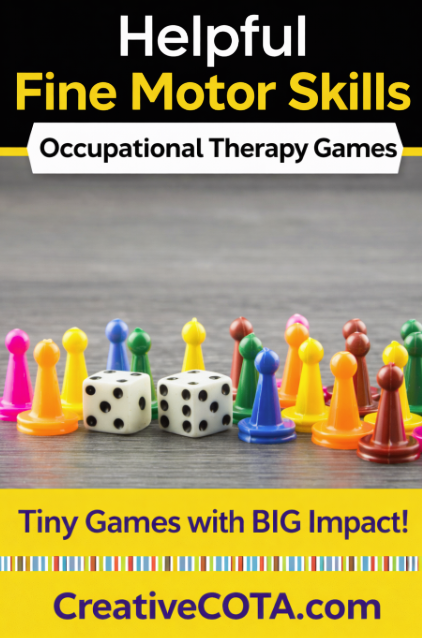
Sometimes the smallest games can make the biggest impact—especially when it comes to occupational therapy games, fine motor activities, and classroom fun. Tiny games like the World’s Smallest Games series are compact, portable, and versatile, making them perfect for occupational therapy sessions, classroom centers, indoor recess, yankee swap or white elephant gift ideas or even holiday stocking stuffers. These little games keep kids engaged while building important skills like hand-eye coordination, visual perceptual skills, cognitive thinking, and social-emotional development—all in a fun, hands-on way.
Why Tiny Games Are Great for Occupational Therapy and Skill-Building
Tiny games aren’t just entertaining—they target a variety of skills that are essential for occupational therapy and classroom learning:
- Fine motor skills: Manipulating small cards, pegs, or pieces strengthens hand muscles and coordination.
- Visual perceptual skills: Games like Spot It and Colorforms support visual scanning, matching, and spatial awareness.
- Cognitive skills: Many games build attention, memory, problem-solving, and sequencing.
- Social-emotional skills: Playing in pairs or small groups encourages turn-taking, patience, and cooperation.
Top Tiny Game Picks for Occupational Therapy and Classroom Use
- 🎨 World’s Smallest Lite-Brite (click to see)
- Age Range: 5+
- Skills Targeted: Fine motor, hand-eye coordination, creativity, pattern recognition
- 🃏 World’s Smallest UNO (click to see)
- Age Range: 7+
- Skills Targeted: Color and number recognition, turn-taking, strategy, social-emotional skills
- ⏱ World’s Smallest Perfection (click to see)
- Age Range: 6+
- Skills Targeted: Hand-eye coordination, visual scanning, reaction time, problem-solving
- 🎵 World’s Smallest Bop It (click to see)
- Age Range: 6+
- Skills Targeted: Listening skills, sequencing, attention, quick motor responses
- 🍌 World’s Smallest Bananagrams (click to see)
- Age Range: 7+
- Skills Targeted: Letter recognition, spelling, word-building, fine motor
- 🔍 World’s Smallest Spot It (click to see)
- Age Range: 6+
- Skills Targeted: Visual discrimination, attention to detail, speed, social interaction
- 😀 World’s Smallest Colorforms Silly Faces (click to see)
- Age Range: 4+
- Skills Targeted: Creativity, fine motor, visual-motor integration, imaginative play
Ways to Use Tiny Games for Therapy and Classroom Activities
- Occupational therapy sessions: Perfect for one-on-one or small group sessions targeting fine motor, visual perceptual, or social-emotional skills.
- Classroom centers: Rotate games through literacy, math, or fine motor centers for short, skill-building activities.
- Indoor recess activities: Ideal for small spaces and quiet, hands-on fun that keeps kids engaged.
- Travel and road trips: Tiny games are easy to pack in a bag and provide hands-on entertainment while reducing screen time.
- Screen-time reduction: Fun, interactive play with tiny games encourages skill development while giving devices a break.
- Stocking stuffers or small gifts: Practical, fun, and skill-building—they make a meaningful holiday treat.
- Fun with friends and family: Tiny games can be used for Yankee Swap gifts, White Elephant gift ideas, mini game nights with something like the Worlds Smallest Candyland, or novelty versions of games like World’s Smallest Beer Pong or World’s Smallest Cornhole for extra laughs and engagement.
Tips for Using Tiny Games Effectively
- Store games in a small tub, bin, or bag that’s labeled and easily accessible.
- Keep multiple versions of popular games for classroom or group use to avoid long wait times.
- Have a small “loose parts” bin for tiny pieces during cleanup.
- Remind kids to make sure all parts go back into the proper container at cleanup time.
- Rotate games periodically to maintain novelty and engagement.
Tiny games may be small in size, but they provide big opportunities for occupational therapy, fine motor skill development, and classroom fun. Whether in therapy sessions, classroom centers, indoor recess, or on the go, they’re a simple way to combine skill-building, hands-on engagement, fun, laughs and screen-free play.

About the Author
I am a Certified Occupational Therapy Assistant (COTA) and have been working in a public school system for more than 25 years. My resources can be found on TPT, BOOM Learning, Made by Teachers, Classful, and Your Therapy Source. I appreciate your interest wherever you wish to shop.
I also now have workbooks on Amazon.
My mission is to help you find creative ideas to incorporate fine motor, visual perception, gross motor, and social-emotional learning into your lessons.
I hope you consider signing up for my Free Resource Library with your Email. I send out emails about once a week and share resources, tips, and planning ideas for your classroom or occupational therapy needs. Hopefully, these help your students work on building their skills in a fun and engaging way.
Thank you for your interest in my resources and ideas. I hope you will consider following my journey on TPT or wherever you wish to shop.
This post contains affiliate links. If you use a link and make a purchase I may receive a small commission at no cost to you.