
As a school-based occupational therapy assistant, I’ve learned that supporting writing doesn’t always mean handing a student a pencil and paper. For many of my students—especially those who are non-speaking, use AAC, or have sensory and motor differences—traditional handwriting tasks can be limiting or even stressful.
That’s why I use a neurodiversity-affirming approach in my therapy sessions. This means focusing on communication, regulation, and engagement in ways that respect and celebrate each student’s differences—no forced eye contact, no trying to “fix” behaviors, and no pushing students to use tools that don’t work for them.
What Is a Neurodiversity-Affirming Approach in OT?
It starts with recognizing that all brains are wired differently, and that difference is not a deficit. Instead of forcing students to fit into typical learning molds, we adapt our tools and expectations to meet them where they are.
In practice, this looks like:
- Creating sensory-friendly environments
- Allowing students to communicate in the ways that work best for them
- Providing visual supports and choices
- Building trust and following a child’s interests
- Supporting neurodivergent learners in ways that honor their needs and strengths
Generating Text Without a Pencil: Meet the “Alternative Pencil”
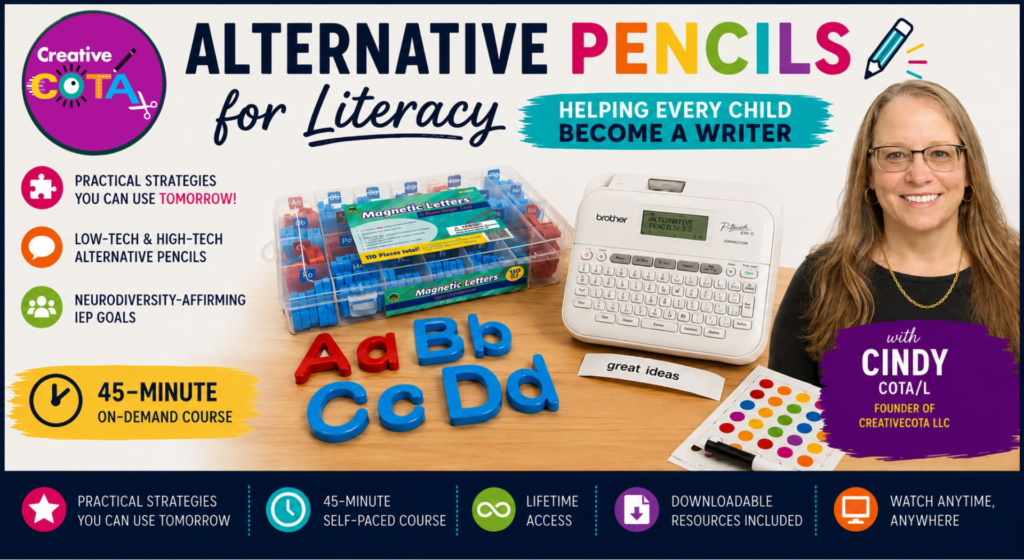
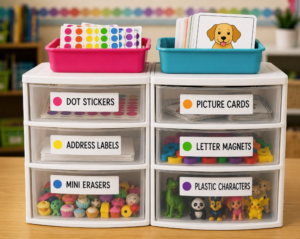
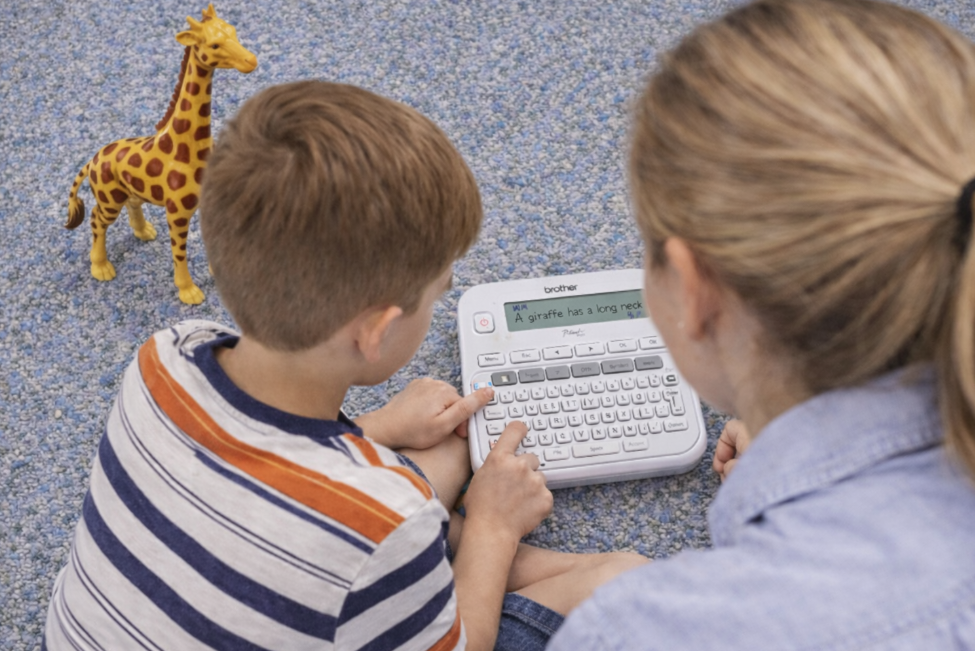
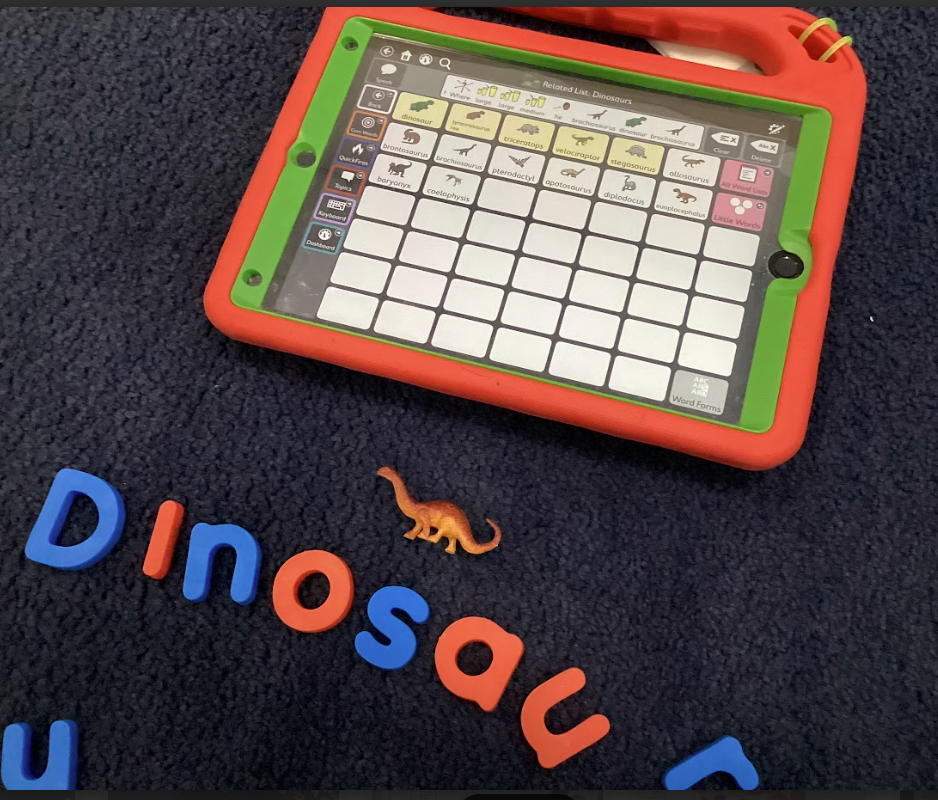
One of the biggest shifts in my therapy sessions has been using alternative pencils—tools that allow students to generate text and develop early literacy skills without having to physically write. For some students, this might be pointing to picture symbols, using an AAC device, using magnet or puzzle letters, stickers, selecting words from a chart, using a keyboard with their iPad, or even using a label maker.
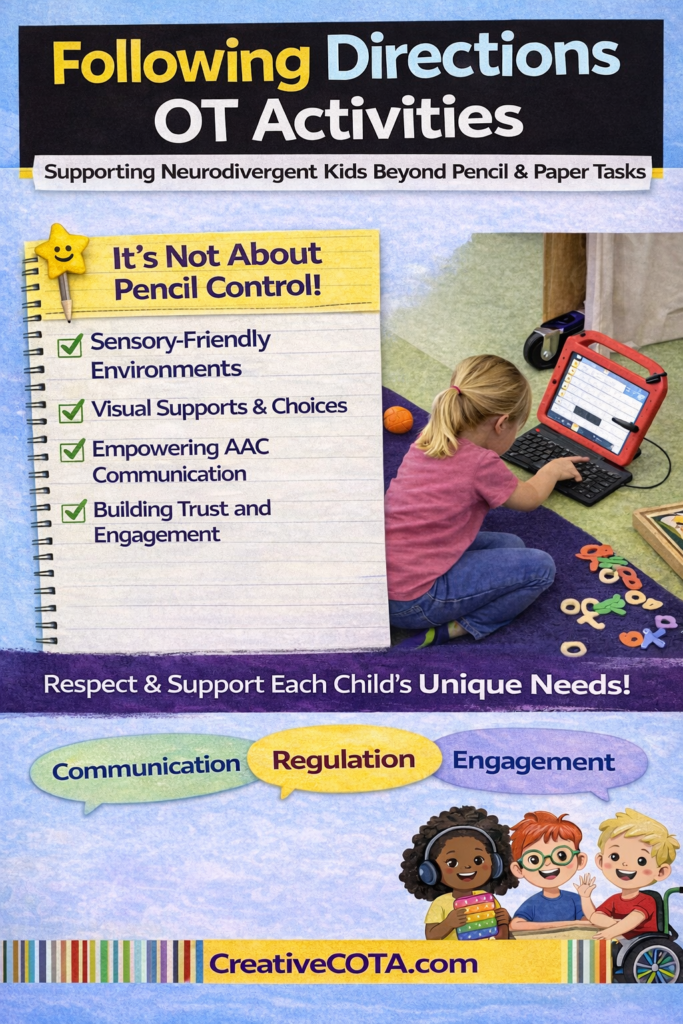
For two of my students last year, this approach completely changed how they worked on writing.
J’s Story: BookCreator as a Literacy Tool
J is a kindergartener who uses AAC, loves rolling anything, and lights up when he sees himself in videos. He was just beginning to explore generating text and had limited verbal language, but lots to share.
Throughout the year, I took pictures or recorded short clips of him during therapy sessions—interacting and using materials, jumping, sorting, swinging, rolling and catching balls… After each clip, I’d type a short sentence describing what he/we did, and we’d upload everything into BookCreator to create a digital therapy journal. Examples included: J had fun jumping. The car is in the tunnel. I can paint. The ball is red. J was sleepy on the mat…
By the end of the year, J was “reading” the pages, watching the videos, and even starting to add his own words using his AAC system, or typing on the iPads on screen keyboard with the help of word prediction. The book became a way for him to see himself as a communicator, as a reader, and as a writer—without ever picking up a pencil. He wasn’t the only one. This worked for more than a dozen of my more challenging autistic students.
A’s Story: SnapType to Turn Interests into Writing Opportunities
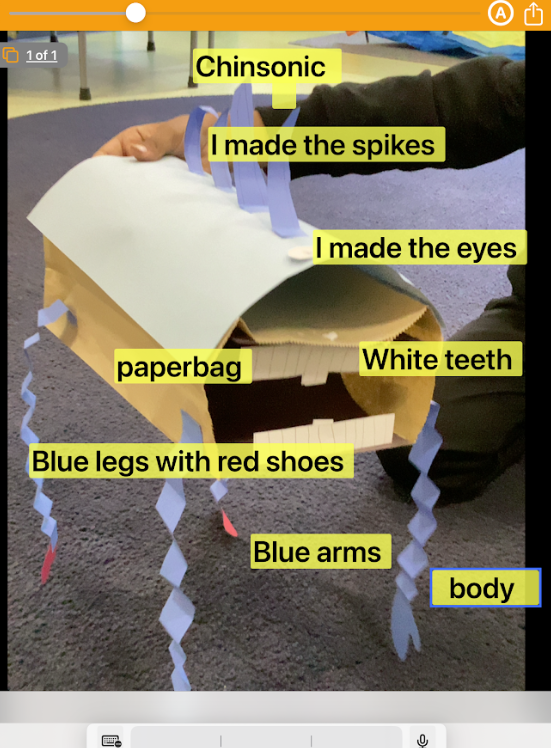
Another autistic student I worked with last year was absolutely obsessed with puzzles. He has access to an AAC device, but primarily communicates using scripts. He also struggles with traditional writing tasks. To support him, we used the SnapType app, a fantastic tool that lets you take pictures of worksheets or objects and then type labels or sentences directly onto the images. We took pictures of his favorite puzzles and activities, then he helped me label the pictures in the app using a bluetooth keyboard and his iPad. This not only made writing meaningful and connected to his interests, but also helped build his confidence and vocabulary. He loved seeing his words appear on the screen and felt proud of creating something that reflected his own experiences.
Using SnapType as an alternative pencil gave him a voice and a way to participate in writing tasks without the frustration of holding a pencil. It turned a traditionally challenging skill into a fun, motivating activity.
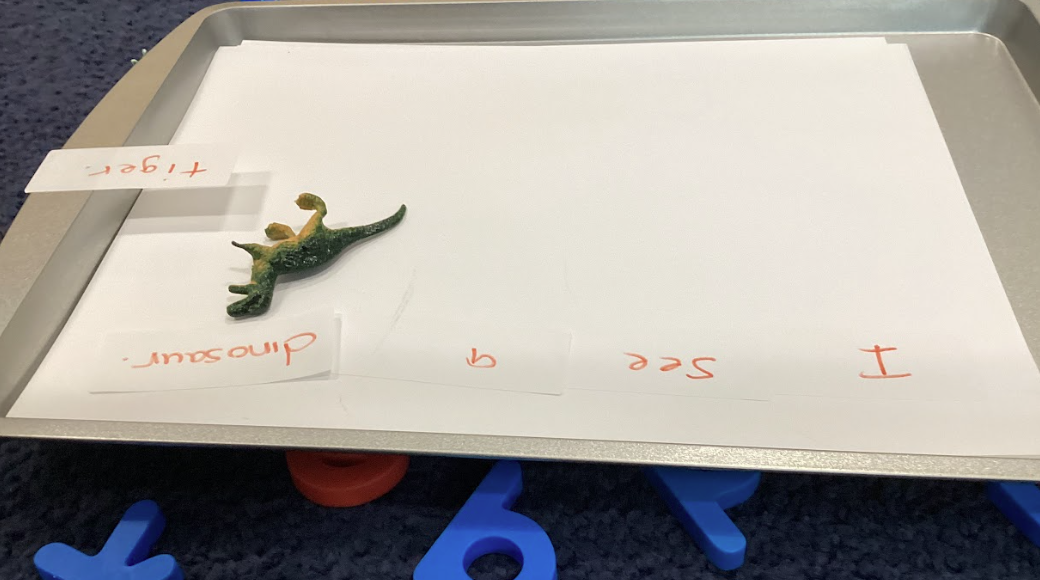
This student made a trap to catch his favorite video character, so we labeled all the parts.
Why This Works
These strategies aren’t just about replacing handwriting—they’re about creating meaningful opportunities for self-expression and language development. They’re also highly motivating for students who find traditional writing tasks frustrating or limiting.
Using BookCreator , SnapType or any tool like it allows you to:
- Celebrate what students can do
- Capture real-life, functional language
- Share meaningful progress with families and IEP teams
- Build early literacy skills in a low-pressure way
Want to Try This in Your Practice?
Set Up “Drive-By” Activities in Your Space
One simple way to build independence and engagement is to organize your therapy room with “drive-by activities”—stations or materials that students can approach and use with minimal direction. These support regulation, motor planning, and self-directed learning. Take time to ask parents, caregivers, and support staff about the student’s interests—and be sure to include those favorites in your choice boards and activity stations to boost motivation and connection.
Here’s what this might look like:
- ✅ A standing easel with dry erase markers for vertical writing
- ✅ Dry erase markers at the window to encourage prewriting strokes and drawing on another vertical surface
- ✅ A water writing board or chalkboard for big strokes and sensory input
- ✅ A bin of fidgets, putty, or theraputty with small hidden objects
- ✅ A sorting station with colored bins and manipulatives
- ✅ A puzzle tray or Lego station for visual-motor and fine motor work
- ✅ A tunnel, scooter board, balls, swing and/or trampoline for sensory regulation
- ✅ A basket of small cars or animals to encourage pretend play
- ✅ Visual choice boards & AAC devices to support communication and transitions
- ✅ Large piece of bulletin board paper with markers, crayons and stickers for creative expression. On the floor, table or wall whatever works in your space.
- ✅ Jump n Launch This one is a favorite in our room! Especially with J, he discovered that he could fit two tennis balls in to launch across the room at the same time.
These activities offer students a sense of control, encourage movement, and provide natural opportunities for interaction and observation—all while aligning with your therapy goals. Have your camera ready to capture the moments of play with a purpose to write about at a later time.
Try These Alternative Pencils with Your Students
To support students who struggle with traditional handwriting, try offering these alternative ways to generate text:
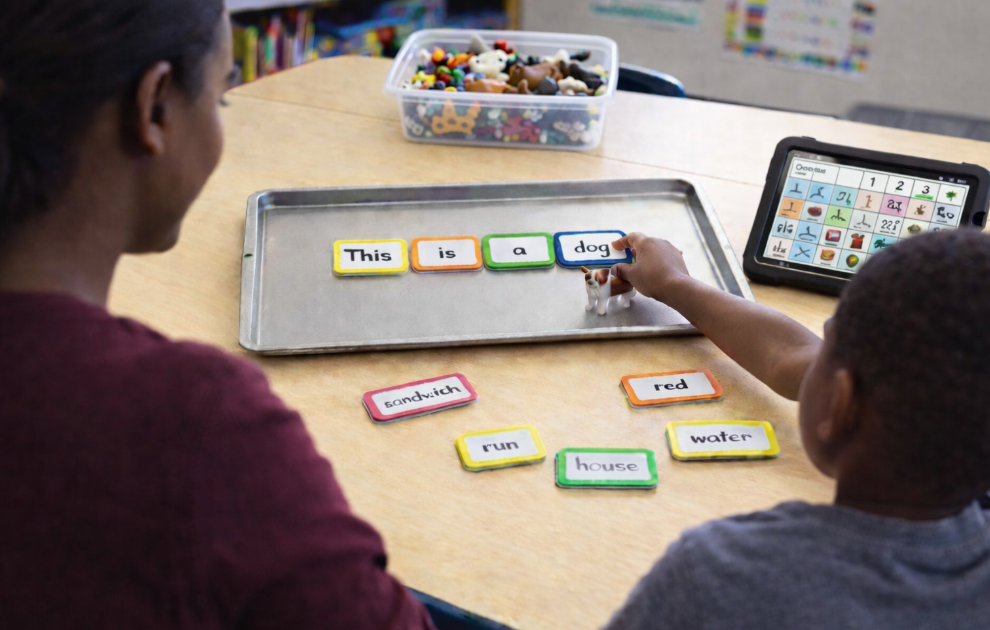
- BookCreator – Combine images, video, and typed text to create custom books
- Label maker-Students can type out words or sentences
- SnapType – Take a photo and type directly onto it (great for labeling and descriptions)
- Keyboarding – On screen keyboards or large print Bluetooth keyboards for ipads can be helpful.
- Picture symbol boards – For sentence building using visuals
- Voice-to-text apps – Let students dictate their ideas
- Magnet letters– students use letters to build words and sentences
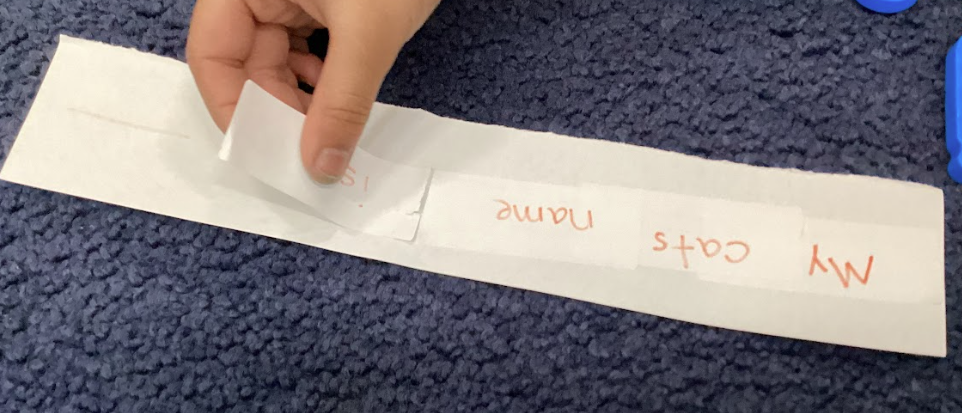
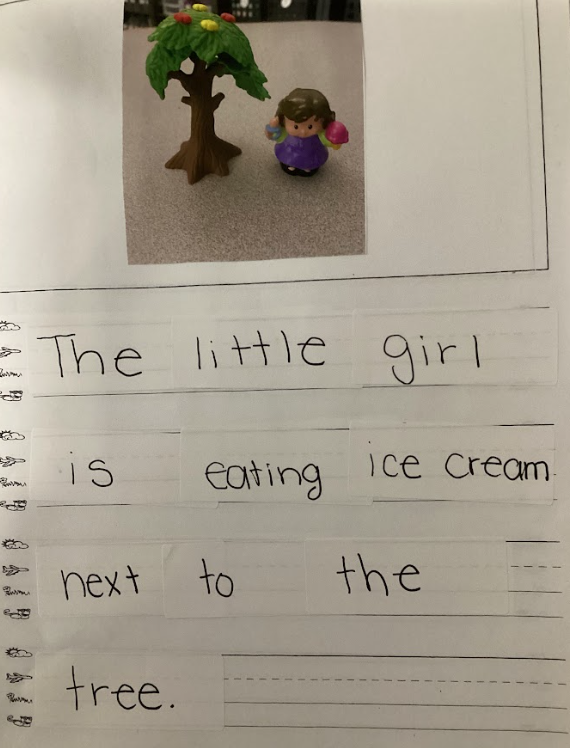
- Address labels-Write words on the labels and have them put them in order to create a sentence.
- Dry-erase locker magnets-Write words with a permanent marker. Students can arrange them in order to make sentences. (To erase the permanent marker color over it with a dry erase marker.)
- Scribe: Honor all forms of communication and write for students. Record their gestures, words, drawings…
- AAC: Allow use of their Augmentative and Alternative Communication devices for generating text.
- Object-to-word matching – Pair real items with printed words for labeling
These tools not only remove barriers but also invite students to see themselves as writers, even if they’re not holding a pencil. If you’re ready to explore a more, I’ve created a bundle of evaluation, screening, and goal-setting resources that can help you plan therapy that’s student-centered and meaningful. It includes:
- Sample IEP goals that reflect communication, sensory needs, and alternative writing tools
- Data collection forms
- Play-based activity lists
- Templates for tracking progress—without the overwhelm so you can focus on what is important, your students
Final Thoughts
Supporting writing doesn’t have to start with paper and pencil. For many students, especially those with complex needs, it starts with movement, choice, communication, and trust. Tools like BookCreator and SnapType give us a new way to capture student voices—visually, meaningfully, and respectfully.
Let’s keep redefining what “writing” looks like—and make room for every student to be an author in their own way. Want to learn more? Check out my alternative pencil on demand course.
(This resource contains affliate links. If you use a link and make a purchase I may receive a small fee at no cost to you.)