As you start setting up your classroom for a new school year, there’s a lot to think about: seating arrangements, supply labels, bulletin boards, and the flow of daily routines. But one area that often makes a huge difference—and is sometimes overlooked—is the calm-down corner.
More than just a cozy space, a calming corner can be a game-changer for classroom management, emotional regulation, and student well-being.
What is a Calming Corner?
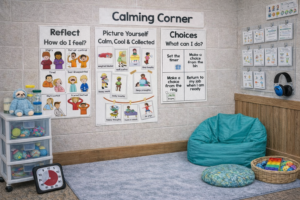
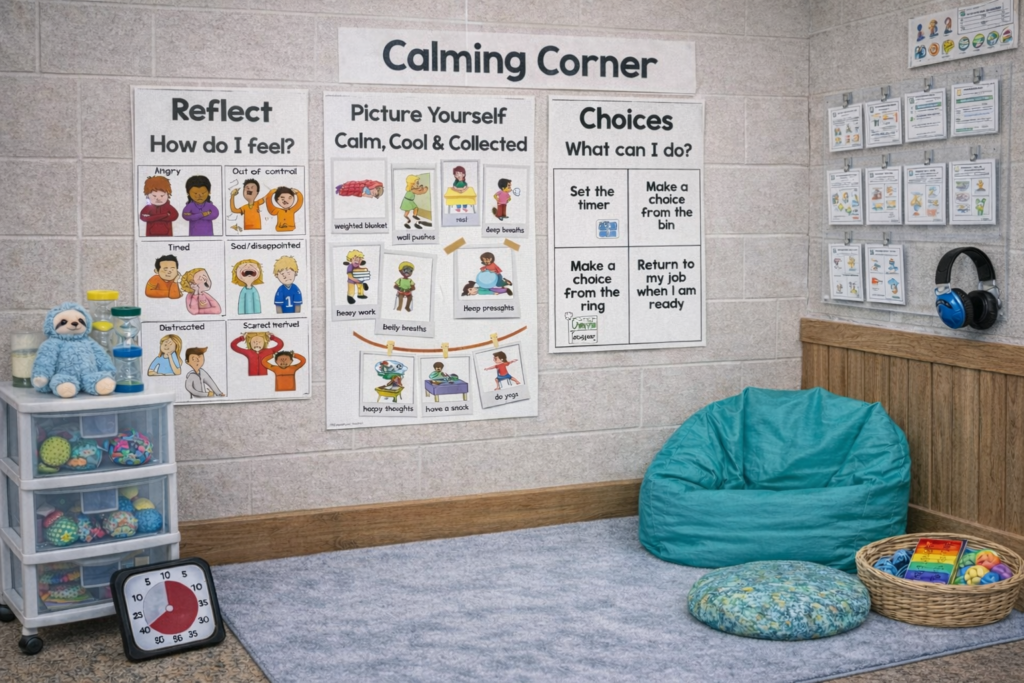
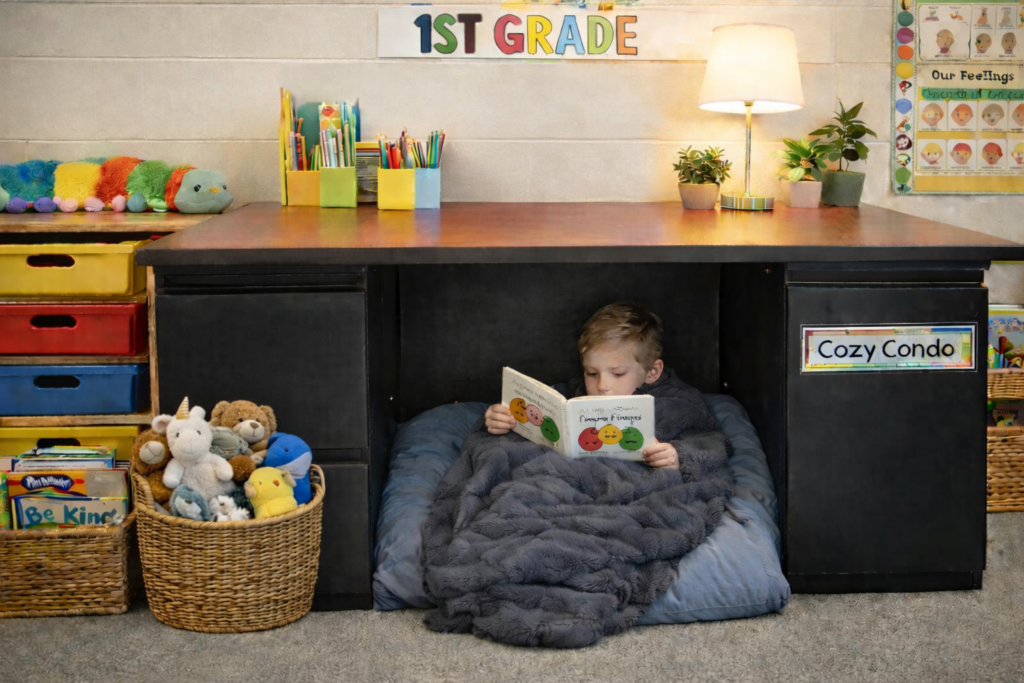
A calming corner (or “cool down zone,” “peace place,” “bounce station,” “cozy condo” under your desk, depending on your style) is a designated area in your classroom where students can go to regulate their emotions. It’s a small, quiet space where kids can take a break when they feel overwhelmed, overstimulated, or upset.
Think of it as your classroom’s built-in reset button.
Why It Matters
Teachers know the reality: some days are just hard. Students might come in carrying worries from home, navigating big emotions, or struggling with peer dynamics. And while we work on academic skills, we also need to help them develop emotional tools to handle those challenges.
Having a calm-down corner shows students that it’s okay to feel emotions—and that they can learn how to manage them in a safe, constructive way.
One teacher recently shared this about their calm-down area:
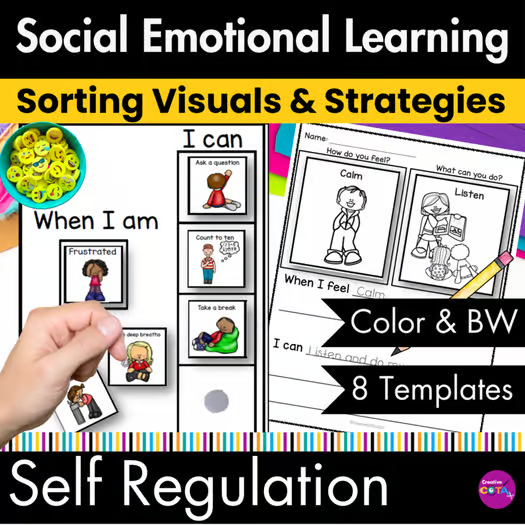
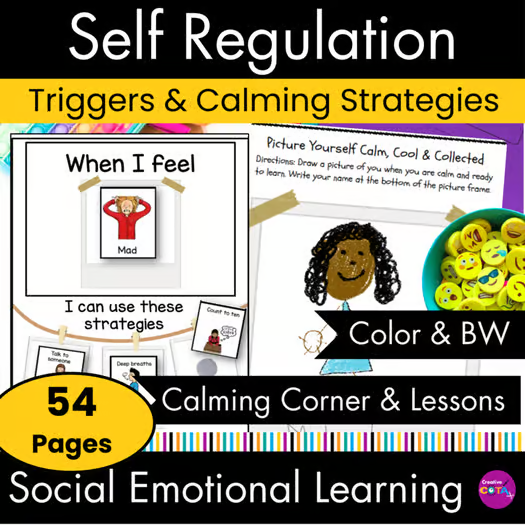
“Game changer! This is a great resource for a calm down corner or bounce station. It’s very helpful for students that struggle with reading and writing. When students need to calm down, I simply let them sort the behaviors.”
Sometimes, it’s not just about calming down. It’s about helping kids understand what they’re feeling—and what to do next.
What can you add to your corner?
A small rug or soft seating option
Visuals showing emotions and calming strategies
Fidgets or stress-relief tools in a bin
Noise-canceling headphones
Some type of timer, like these sand timers
A weighted blanket or stuffed animal
Addressing Common Classroom Challenges
Here are a few things I’ve heard from fellow educators:
- “I’m not sure how to support students who get overwhelmed quickly.”
- “We have great discussions about behavior, but it doesn’t always stick.”
- “I want to reinforce SEL without taking too much time away from academics.”
If any of that sounds familiar, integrating some quick, meaningful activities into your calm-down corner can help.
A simple behavior sort or reflection sheet can give students something to do with their feelings—something productive and visual that helps them re-center. And when it’s part of a routine, it starts to feel less like a “punishment” and more like a tool they can use.
Start of Year = Perfect Time
Back-to-school season is the ideal time to set expectations and introduce SEL tools. Students are still learning your classroom culture, and routines are being formed. Whether you’re reviewing expected behaviors or talking through what “calm” looks like, having visuals and clear sorting tasks can support that conversation.
These kinds of tools also work great throughout the year—during transitions, after breaks, or at the end of the year when emotions run high again.
Easy Ways to Make it Work
- Add sorting mats and behavior cards to your calming corner.
- Laminate visuals for durability (and easy reuse).
- Use reflection sheets as part of check-ins or after a student returns from a break.
- Make it part of your SEL rotation or morning meeting.
- Choose color or black-and-white options depending on your printing needs.
Even just 5 minutes a day with the right SEL tool can make a real impact—both for the individual student and your classroom as a whole.
Setting up your space to support emotional growth doesn’t have to be complicated. With the right structure, you can give students the freedom to feel, reflect, and move forward—skills that will serve them far beyond the classroom.
It doesn’t have to be big or elaborate. One of the teachers I work with created a “Cozy Condo” right under her desk. It has just a few pillows, a weighted blanket, and some stuffed animals. It’s tucked just behind her kidney table, so behaviors others might view as attention-seeking, she sees as chances to build connection.
Wishing you a smooth and joyful start to the year!

About the Author
I am a Certified Occupational Therapy Assistant (COTA) and have been working in a public school system for more than 25 years. My resources can be found on TPT, BOOM Learning, Made by Teachers, Classful, and Your Therapy Source. I appreciate your interest wherever you wish to shop.
I also now have workbooks on Amazon.
My mission is to help you find creative ideas to incorporate fine motor, visual perception, gross motor, and social-emotional learning into your lessons.
I hope you consider signing up for my Free Resource Library with your Email. I send out emails about once a week and share resources, tips, and planning ideas for your classroom or occupational therapy needs. Hopefully, these help your students work on building their skills in a fun and engaging way.
Thank you for your interest in my resources and ideas. I hope you will consider following my journey on TPT or wherever you wish to shop.
This post contains affiliate links. If you use a link and make a purchase, I may receive a small commission at no cost to you.