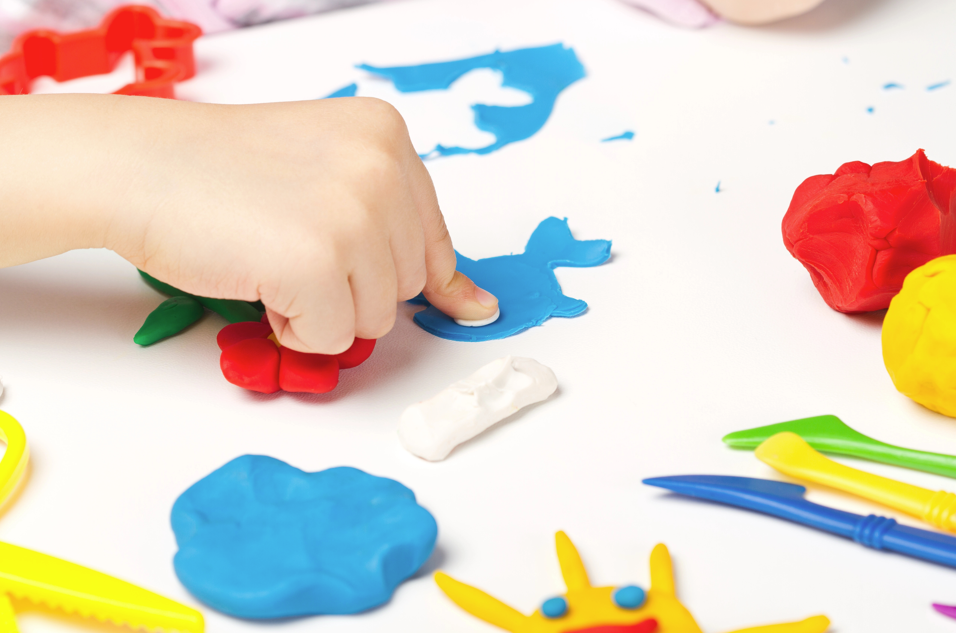
Before children begin writing letters and numbers, they need a strong foundation in prewriting skills. These skills help little hands gain the strength, coordination, and control needed for writing success. Whether your child is in preschool, pre-k, kindergarten, or receiving support through special education or occupational therapy, this guide will help you understand why fine motor techniques and pencil control practice are essential before handwriting even begins.
What Are Prewriting Skills?
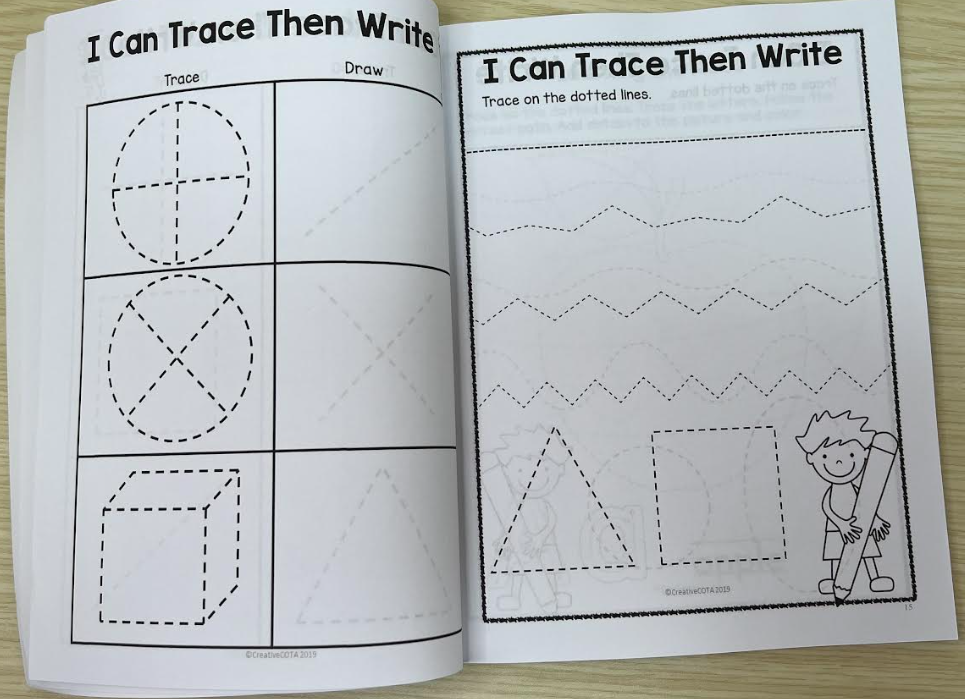
Prewriting skills are the building blocks children need to learn how to write. Before forming letters, children must be able to copy and trace lines and shapes with control. These prewriting strokes—such as vertical, horizontal, diagonal, and circular lines—help kids build hand strength, develop visual-motor coordination, and improve pencil grasp.
Typical prewriting shapes in developmental order:
- Vertical line
- Horizontal line
- Circle
- Cross
- Diagonal lines
- Square
- Triangle
Mastery of these strokes supports future handwriting by giving children the control they need to form letters and numbers correctly. This prewriting skills workbook helps toddlers, preschoolers, and special needs learners build the fine motor, tracing, and step-by-step drawing skills they need to get ready for writing.
Why Start Before the Pencil?
Jumping into writing letters too soon can cause frustration and improper habits. Instead, children benefit from activities that focus on strengthening the small muscles in the hands and fingers. This helps them learn to control a pencil without stress.
You can support learning to write before a pencil ever hits the page. Here’s how:
No-Pencil Ways to Learn Letters and Numbers
Try these multi-sensory ideas to build foundational writing skills:
- Tracing letters in sand, shaving cream, or salt trays
- Drawing with fingers on fogged-up mirrors or windows
- Creating letters with playdough, pipe cleaners, or Wikki Stix
- Sky writing using large arm movements
- Writing on vertical surfaces like chalkboards or easels (great for improving wrist extension and pencil grip)
These fine motor activities help kids develop control while keeping writing fun and low-pressure.
Try Cross Crawl and Midline Movements
Before writing, children also need to develop coordination between the left and right sides of the body. Crossing the midline (reaching across the center of the body) strengthens brain connections for both motor and cognitive development.
Cross Crawl Exercise: Have your child stand and touch their right elbow to their left knee, then switch sides. Repeat 10–15 times. This movement supports body awareness, coordination, and even early literacy.
Want an Easy Way to Get Started?
If you’re looking for ready-to-use prewriting skills activities, tracing worksheets, pencil control practice, and step-by-step drawing pages that build early writing foundations, my Pre Writing Skills workbook might be just what you need. It’s packed with OT fine motor exercises and fun doodle-style pages designed for toddlers, preschool, kindergarten, and special needs learners. Created by a school-based occupational therapy assistant (that’s me!), this book helps children learn through playful practice.
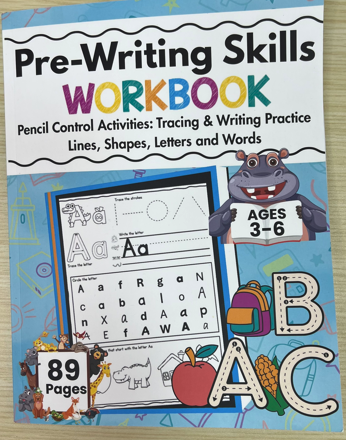
You can check it out on Amazon, comes printed and ready to go, just developmentally supportive fun.
A Word to Parents
Whether you’re preparing your child for school or supporting them at home, it’s never too early—or too late—to work on prewriting skills. You can even teach your little one to write before they pick up a pencil! Just keep activities fun, simple, and pressure-free.
And if you notice your child struggling with fine motor control, grasp, or visual-motor coordination, don’t hesitate to check in with an occupational therapy professional. Early support can make a big difference.

About the Author
I am a Certified Occupational Therapy Assistant (COTA) and have been working in a public school system for more than 25 years. My resources can be found on TPT, BOOM Learning, Made by Teachers, Classful, and Your Therapy Source. I appreciate your interest wherever you wish to shop.
I also now have workbooks on Amazon.
My mission is to help you find creative ideas to incorporate fine motor, visual perception, gross motor, and social-emotional learning into your lessons.
I hope you consider signing up for my Free Resource Library with your Email. I send out emails about once a week and share resources, tips, and planning ideas for your classroom or occupational therapy needs. Hopefully, these help your students work on building their skills in a fun and engaging way.
Thank you for your interest in my resources and ideas. I hope you will consider following my journey on TPT or wherever you wish to shop.
This post contains affiliate links. If you use a link and make a purchase I may receive a small commission at no cost to you.