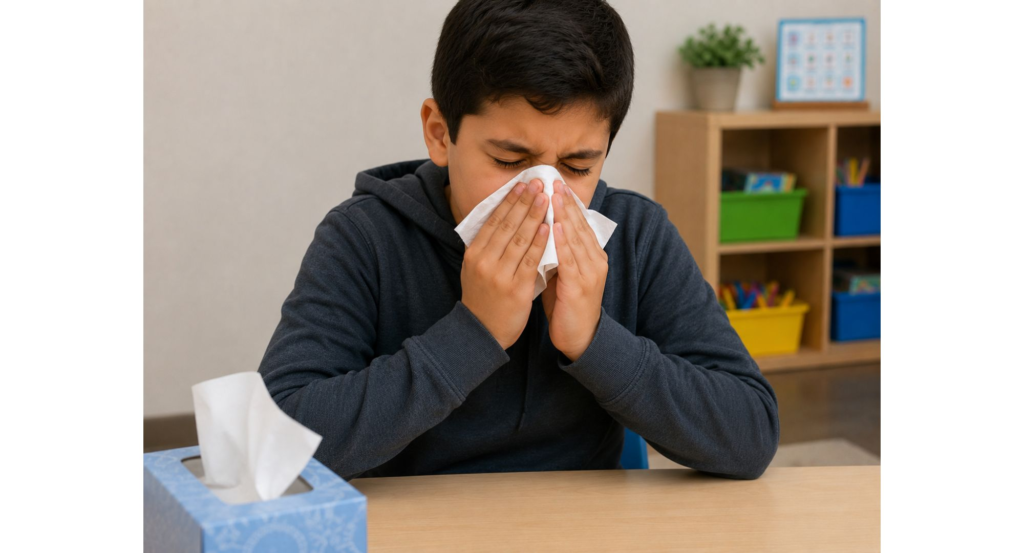
If you’ve ever told a child to “blow your nose” only to have them blow through their mouth, sniff harder, or look completely confused, you’re not alone.
For many children, nose blowing is a surprisingly complex skill. Before they can successfully blow their nose into a tissue, they first need to understand how to direct air out through their nose.
One way to teach this skill is with a simple cotton ball game.
Why Nose Blowing Can Be Difficult
Nose blowing requires children to:
- Understand the difference between breathing through the nose and mouth
- Coordinate airflow
- Isolate one nostril at a time
- Generate enough force to move mucus
- Follow multiple steps in sequence
Many children, especially younger children or those with developmental delays, benefit from practicing these skills in a fun, low-pressure way before attempting to use a tissue.
The Cotton Ball Nose Blowing Activity
What You’ll Need
- Cotton balls
- A clean table or tray
- Disinfecting wipes or cleaning supplies
- Soap and water for handwashing
How to Play
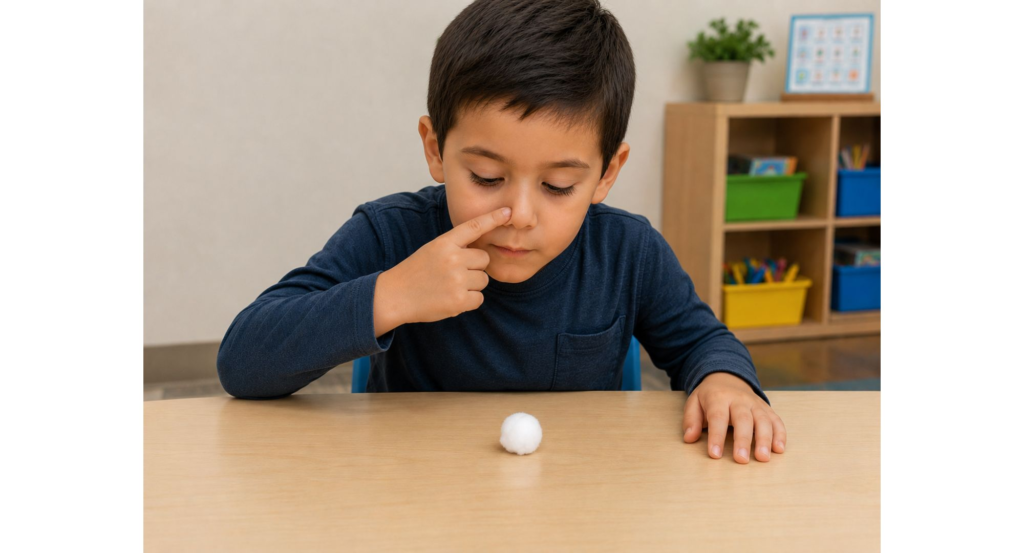
- Place a cotton ball on the table.
- Have the child gently hold one nostril closed with a finger.
- Encourage them to blow air out through the open nostril.
- Watch the cotton ball move across the table.
- Practice with both nostrils separately.
Many children enjoy turning this into a game by racing cotton balls across the table or seeing how far they can move them with one push of air.
Why This Works
The cotton ball provides immediate visual feedback. Children can see the result of their effort, which helps them understand what it feels like to direct airflow through their nose.
Unlike asking a child to blow into a tissue, the cotton ball game removes the pressure and lets them focus on learning the movement pattern first.
Building Independence
Once a child can consistently move the cotton ball using their nose, you can begin practicing with tissues. Talk about how the same airflow that moves the cotton ball can also help clear mucus from the nose.
Remember that learning self-care skills takes time and repetition. Celebrate small successes and keep the activity playful.
Don’t Forget the Hygiene Lesson
This activity is also a great opportunity to reinforce hygiene routines.
After practicing, encourage the child to:
- Help clean and disinfect the table surface
- Throw away used cotton balls
- Wash their hands thoroughly
These extra steps help build independence and teach children that taking care of their bodies also includes cleaning up afterward.
A Few Tips
- Keep sessions short and fun.
- Model the skill yourself first.
- Use simple language such as “Close one side and blow.”
- Avoid forcing participation if a child is uncomfortable.
- Praise effort, not perfection.
Sometimes the best therapy activities are the simplest ones. A cotton ball, a table, and a few minutes of practice can help children develop an important self-care skill that supports health, independence, and confidence.

About the Author
Hi, I’m Cindy, a school-based Occupational Therapy Assistant with nearly 30 years of experience helping neurodivergent and autistic elementary students succeed in the classroom. Through CreativeCOTA, I share practical therapy ideas, classroom strategies, printables, and resources that save time while making learning more meaningful and engaging.
I’m especially passionate about helping struggling writers become successful communicators through the use of alternative pencils. Whether that means using a label maker, magnet letters, address labels, keyboards, or AAC, I believe every child deserves the opportunity to generate text and share their ideas.
When I’m not working with students, you’ll usually find me creating new resources for teachers and therapists, writing on the CreativeCOTA blog, or testing new therapy ideas that make learning feel less like work and more like play.
If you’d like more practical ideas, be sure to explore my blog, Amazon Store, browse my Teachers Pay Teachers store, or check out my on-demand course, Alternative Pencils for Literacy: Helping Every Child Become a Writer. I’m so glad you’re here!