Do you use alternative pencils in your classroom? Does your current writing center include options for students who can’t use a pencil?
The truth is, you probably already own many of the best materials.
An alternative pencil writing center doesn’t require expensive technology or a completely different writing curriculum. It simply gives students multiple ways to generate text so they can participate in the same literacy activities as their classmates.
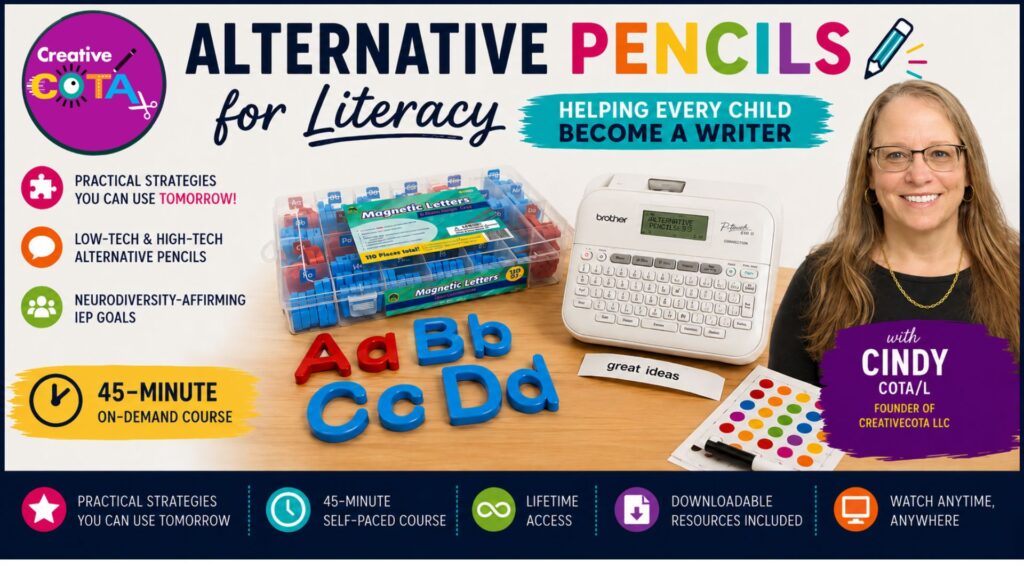
If you’re looking for even more ideas, my on-demand course, Alternative Pencils for Literacy: Helping Every Child Become a Writer, walks you through creating an alternative pencil writing center from start to finish. Inside the course, I share classroom setups, real student examples, how to match alternative pencils to individual learners, practical literacy activities, “generate text” IEP goals, and printable planning guides you can use immediately. Whether you’re an occupational therapist, speech-language pathologist, special educator, classroom teacher, or parent, you’ll leave with practical strategies you can put into practice the very next day.
Why Every Writing Center Needs More Than Pencils
Walk into almost any elementary classroom during writing time and you’ll probably notice the same thing. Every student is expected to use a traditional pencil.
For many children, that’s exactly what they need.
But for struggling writers, reluctant writers, students with fine motor challenges, AAC users, and many neurodivergent learners, the pencil itself can become the biggest barrier to showing what they know.
The goal of writing instruction isn’t to see who can hold a pencil the longest or who has the neatest handwriting. It’s to help students communicate ideas, tell stories, answer questions, and participate in literacy activities by generating text.
When we offer multiple writing tools, we’re removing unnecessary barriers while keeping expectations high.
The writing activity stays the same. The way students generate text changes.
Two Easy Ways to Set Up Your Writing Center
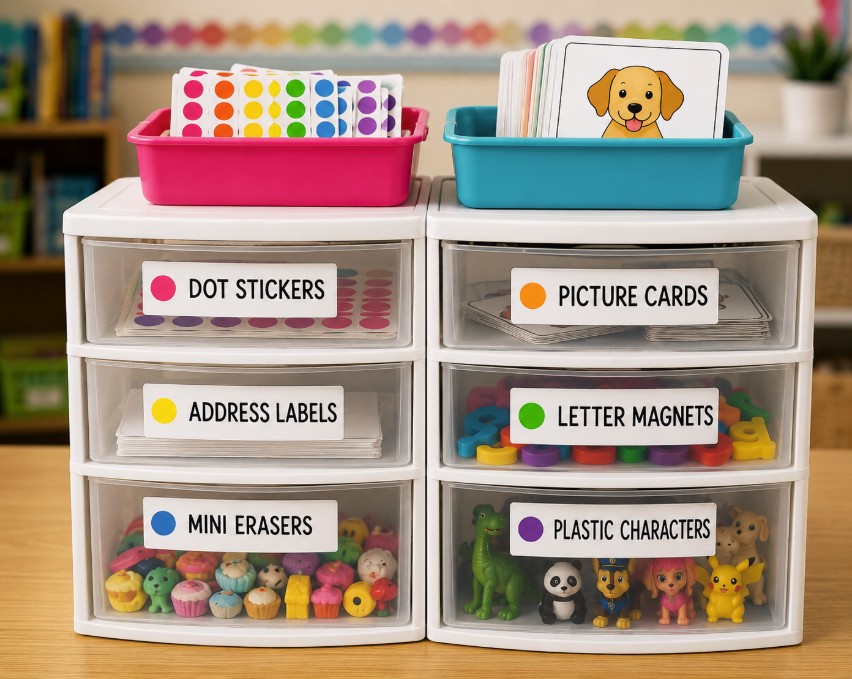
If you have extra space, dedicate a small shelf, rolling cart, or table to alternative pencils. Organize materials in labeled bins so students can independently choose the writing tool that works best for them.
If space is limited, create a grab-and-go writing bin. Pull it out during literacy centers, small groups, or independent writing once or twice each week. It’s a simple way to introduce alternative pencils without changing your entire literacy block.
15+ Things to Include in an Alternative Pencil Writing Center
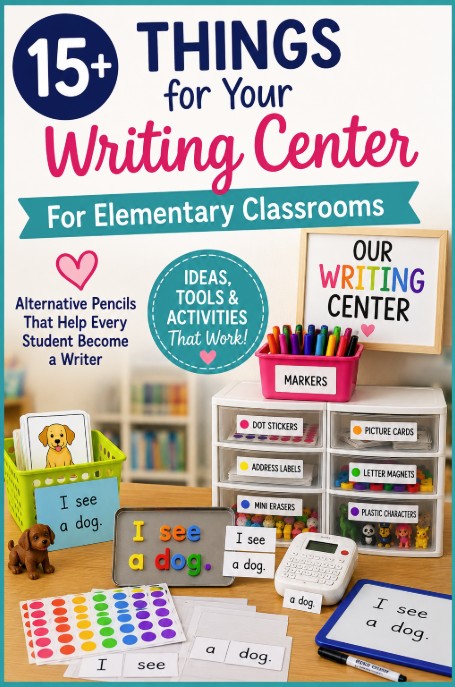
You don’t need everything on this list to get started. Begin with a few favorites and add new tools throughout the year. Students actually love when a “new” writing tool appears in the center. Find all these and more in My Amazon Store.
1. Magnet Letters
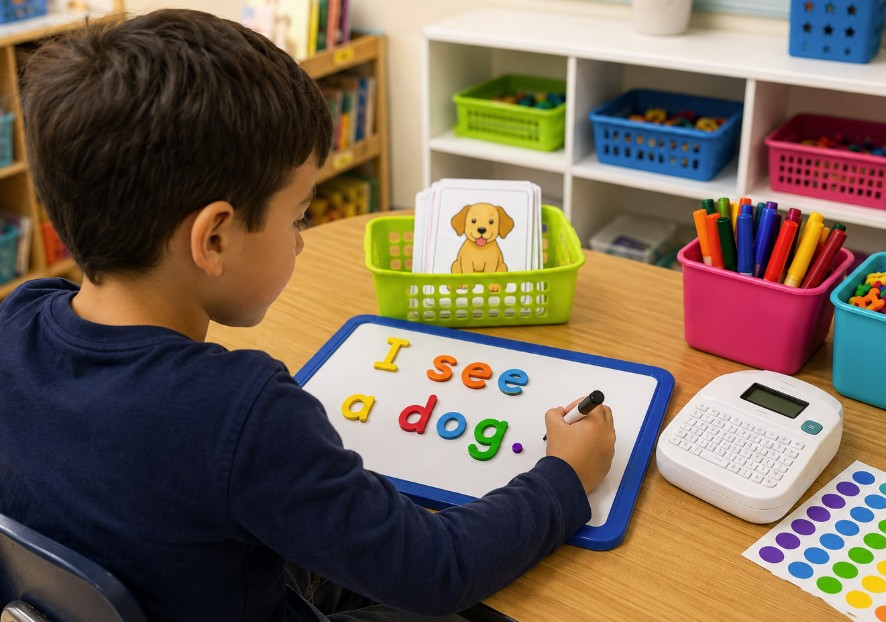
Perfect for building sight words, CVC words, simple sentences, and practicing alphabetical order. Pair them with a small cookie sheet for an instant magnetic writing surface.
2. Dry Erase Locker Name Magnets
Write one word on each magnet with a Sharpie so students can build and rearrange sentences without constantly erasing. They make editing much less frustrating.
3. Yard Sale Dot Stickers
Large pricing stickers are incredibly motivating. Students love peeling and placing them while practicing spelling, sentence building, and labeling activities. Label them with words or letters depending on the activity
4. Address Labels
Pre-write vocabulary words, sight words, or sentence starters. Students can focus on organizing ideas rather than handwriting every word.
5. Label Maker
One of the biggest favorites in my therapy sessions. Watching words print onto a label is highly motivating, especially for reluctant writers.
6. Letter Stamps
Great for students who know the letters they want but struggle with pencil control. They also add a fun sensory component to writing if paired with kinetic sand.
7. Dry Erase Markers
Writing on whiteboards often feels less intimidating than writing on paper. Mistakes disappear quickly, encouraging students to take risks.
8. Fine Tip Markers
Some students simply prefer the smoother glide of a marker over a pencil, making writing less fatiguing.
9. Whiteboards
Perfect for practicing words, brainstorming ideas, or quickly sharing responses before transferring work to paper.
10. Clipboards
Adding clipboards allows students to work in different parts of the classroom and often increases engagement.
11. Cookie Sheets or Magnetic Boards
An inexpensive surface for magnets that keeps everything together and is portable.
12. Laminated Picture Cards or Printed Images
Use them for labeling, sentence writing, descriptive writing, or storytelling. Provide a variety of printed pictures can be glued onto writing worksheets for students to generate text about.
13. Plastic Animals
A handful of animals can spark endless writing. Students can label them, compare them, or create imaginative stories.
14. Mini Erasers
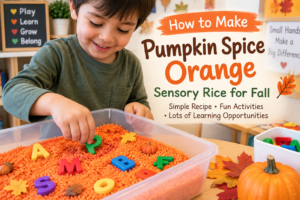
Seasonal or evergreen mini erasers become instant writing prompts. Students enjoy sorting, describing, and writing about them.
15. Character Figures
Bluey, Paw Patrol, Disney characters, superheroes, dinosaurs, and other favorite toys inspire reluctant writers to create stories.
16. Toy Food and Community Helpers
Perfect for vocabulary, categorizing, sequencing, and imaginative writing.
17. Digital Alternative Pencils
Technology can be one of the most powerful writing tools in your classroom. Consider including Chromebooks, tablets, keyboards, or voice-to-text for students who benefit from digital text generation. Apps like Book Creator and SnapType are also wonderful alternatives that allow students to type, dictate, draw, or combine pictures and text to communicate their ideas. For many students, these tools remove the motor demands of handwriting while allowing them to fully participate in the same writing activities as their classmates.
18. AAC Devices
For students who use AAC, the device is their writing tool. It deserves a place in the writing center just like every other alternative pencil.
Click the image below to check out all these things and more in My Amazon Store.
Rotate New Tools Throughout the Year
Instead of introducing every writing tool at once, consider adding one new option each week or every few days.
Students become excited whenever something new appears in the writing center. It also gives everyone time to learn how to use each tool before another one is added.
The writing center stays fresh without becoming overwhelming.
Give Students Something Worth Writing About
Sometimes the writing tool isn’t enough. Students also need meaningful inspiration.
Keep a basket or drawers of interesting objects nearby such as:
- Plastic animals
- Mini erasers
- Seasonal figures
- Toy food
- Vehicles
- Community helpers
- Dinosaurs
- Dollhouse furniture
- Favorite character figures
Students can label the objects, write “I see…” sentences, compare two items, sort them into categories, write descriptive sentences, or create silly stories. They can also take pictures of things they enjoy and use those for writing prompts.
One of my favorite sayings is:
Students get more accomplished when it doesn’t smell like work.
A handful of tiny animals or seasonal erasers often leads to far more writing than another worksheet alone.
The Writing Activity Doesn’t Need to Change
One of the biggest misconceptions about alternative pencils is that they require different lessons.
They don’t.
The same literacy activities you’re already using can work beautifully with different writing tools, including:
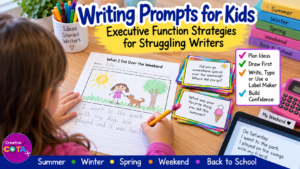
- Picture writing prompts
- Sentence building
- Opinion writing
- Story starters
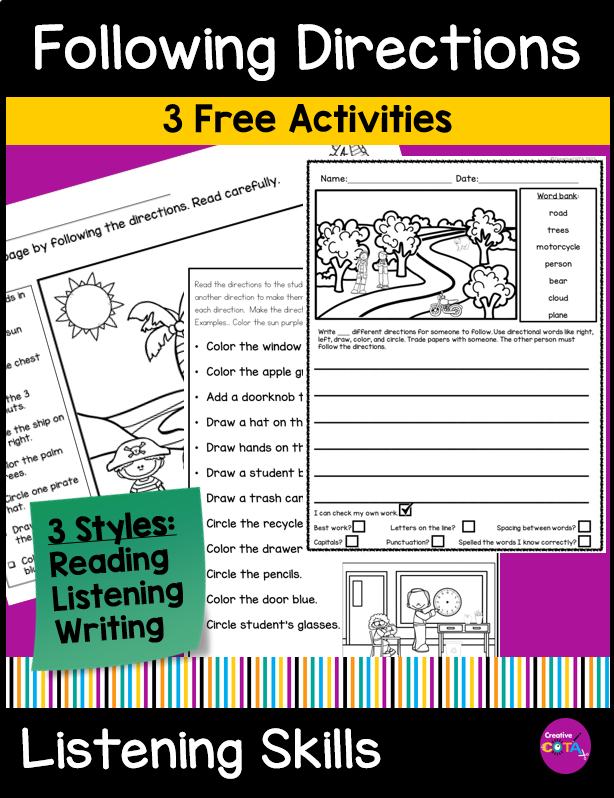
- Following directions activities
- Vocabulary practice
- Sight word activities
- Reading responses
- Science journals
- Label the picture pages
- Write the Room Activities
The expectation remains the same. Students are still generating words, sentences, and stories. They’re simply using the writing tool that allows them to show what they know.
Final Thoughts
Creating an alternative pencil writing center isn’t about replacing handwriting. It’s about expanding opportunities.
Some students will still reach for a traditional pencil every time, and that’s wonderful. Others may choose a label maker, magnet letters, address labels, a keyboard, or their AAC device. What matters is that every student has a meaningful way to participate in literacy.
When we focus on helping students generate text instead of insisting everyone writes the same way, we open the door for more confidence, more independence, and more successful writers.

This post may contain affiliate links. If you purchase through one of these links, I may earn a small commission at no additional cost to you. Thank you for supporting CreativeCOTA!