
(This post includes Amazon Affiliate links. If you use a link to purchase a product I will receive a small commission.)
Navigating multiple schools with a diverse caseload of 50-80 students weekly, I’ve found the perfect solution to make occupational therapy engaging and effective – games. These games serve as dynamic tools for honing foundation skills like visual perception, eye tracking, bilateral coordination, left/right discrimination, in-hand manipulation, turn-taking, handwriting, and executive function skills. Opting for versions in a tin or small case ensures durability during my travels, making them ideal for OT sessions, classroom centers, or impromptu indoor recess activities.
The importance of good sportsmanship is a recurring theme, especially with students who may struggle with losing. To ease tensions, I often playfully threaten a temper tantrum if I lose, highlighting the absurdity of such reactions. This tactic proves effective in helping students manage their own frustration.
In the interest of time, I’ve crafted my own ‘School rules’ for many of these games, streamlining sessions to a concise 5-10 minutes at the end. Going first to provide directions not only facilitates smooth gameplay but also minimizes potential arguments over who goes first.
Discover the joy of integrating these games into your occupational therapy toolkit, ensuring a portable and engaging solution for skill development on the go.
Wondering what games are always in my trusty cart:
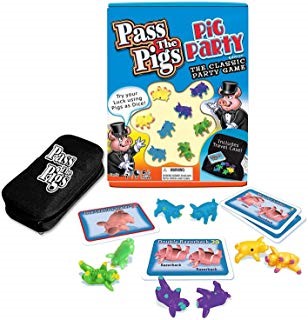
Pass the pigs: I like the colorful Party addition for more pigs and the picture cards. I have laminated the main cards, so students have a model of the point system. Students are asked to use both hands to roll to facilitate the palmer arch. We play to 50 points and do not use multiple rolls. For older students, we use tally marks to score and they keep their own tallies. Great to work on bilateral coordination, tally marks, top-down writing, turn-taking and so much more.
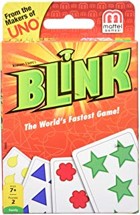
Blink: Mine came in a tin, which makes it even better for travel. I often play with a small group, so we divide out all the cards evenly except the two pile cards. We take turns playing our top 3 cards until the first person goes through their pile. Great for bilateral hand coordination, hand separation, scanning, visual perceptual skills and many more.
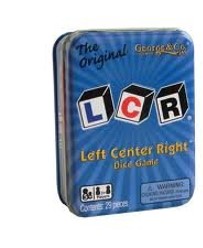
Left Center right: I believe I follow the main rules, but students are asked to always roll using both hands. Great for turn-taking, fine motor control, proprioception, left-right discrimination, and more.
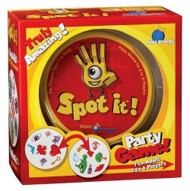
Spot it: There are so many varieties. I currently have original, sports, and hipster. Works on turn-taking, visual perception, scanning, and more.
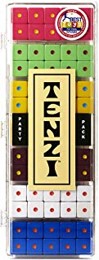
Tenzi: Great game but gets a little loud in a group. Consider using a large piece of felt on your rolling service or individual cookie sheets with felt. I start by rolling all the same number, usually ones. This is a great way to help the students in the group and explain the rules. Depending on time we move up through all the numbers then move onto choosing your own number based on the first roll. For younger students, I take out the speed component and we roll at the same time. Great for hand skills, scanning, subitizing, visual perception, and more.
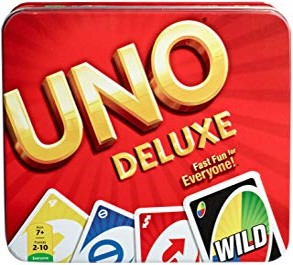
Uno: Similar rules, but I have them only pick one card from the deck when they cannot play. Shortens up the time. Bilateral coordination, hand separation skills, turn-taking, colors, numbers, and more. You can also work in the ZONES of Regulation™. Have students identify emotions, strategies, examples of the zones as they play the coordinating color. Or just when they use a wild card and change the color.
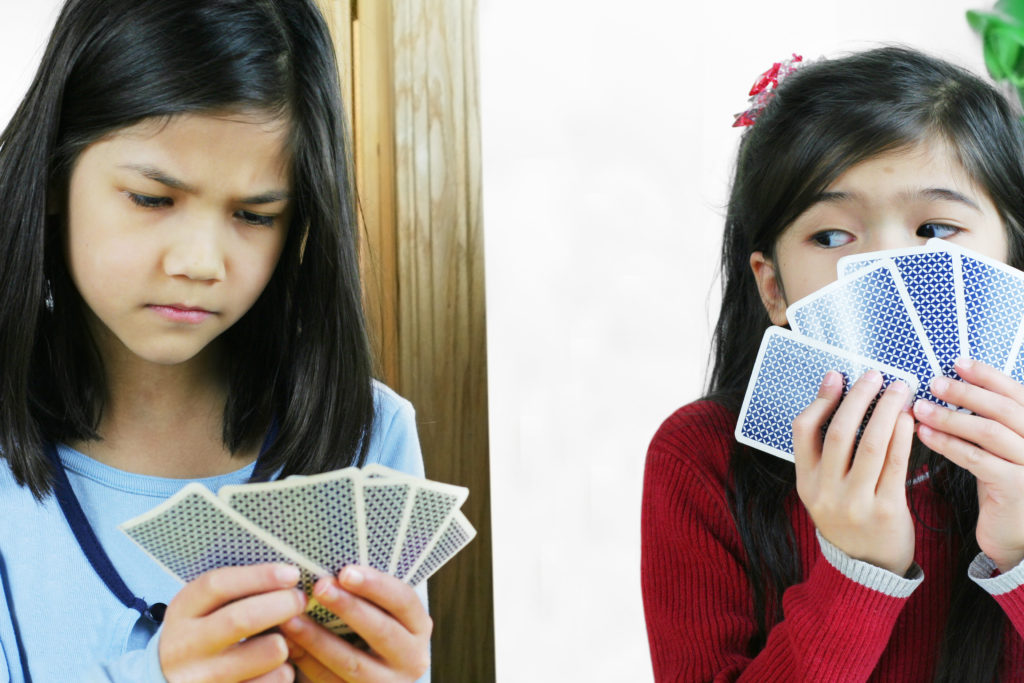
Deck of Cards: So many games. My favorites with students are Crazy 8s and Garbage/Trash.
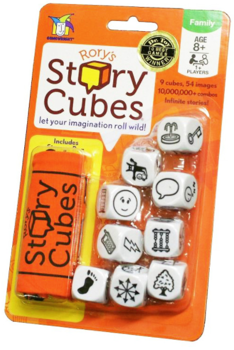
Story cubes: Use the set of dice or check out this site that you can use during distance learning. Students roll the dice and then write a sentence or story about them.
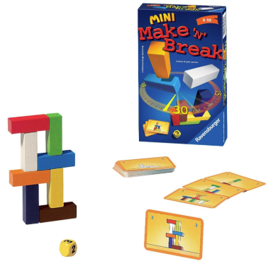
Mini Make n’ Break: Students roll the die to see what level of block design they will create. They copy the block design from the card. Designs can also be made flat to make it easier. I have had my mini version for several years.
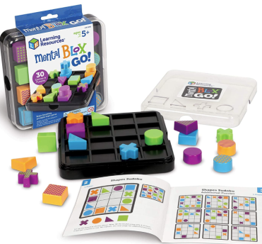
Mental Blox go!: Students recreate block designs. Great for visual perception and hand skills.
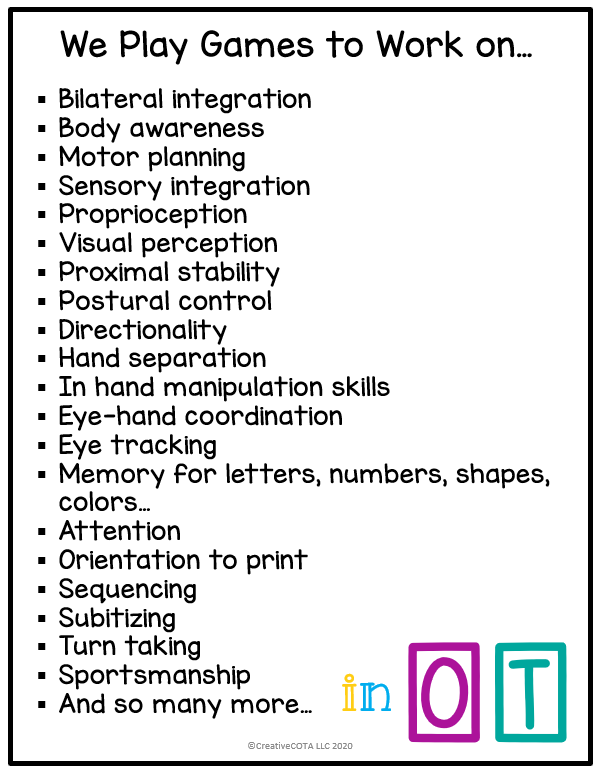
I hang a skill-building poster on my wall and often tell my students and their teachers what skills we are working on when we are playing a game. It may look like we are just having fun, but it is fun with a purpose. Check out this version in my Free Resource Library.
About the Author
I am a Certified Occupational Therapy Assistant (COTA) and have been working in a public school system for more than 25 years. My resources can be found on TPT, BOOM Learning, Made by Teachers, Classful, and Your Therapy Source. I appreciate your interest wherever you wish to shop.
My mission is to help you find creative ideas to incorporate fine motor, visual perception, gross motor, and social-emotional learning into your lessons.
I hope you consider signing up for my Free Resource Library with your Email. I send out emails about once a week and share resources, tips, and planning ideas for your classroom or occupational therapy needs. Hopefully, these help your students work on building their skills in a fun and engaging way.