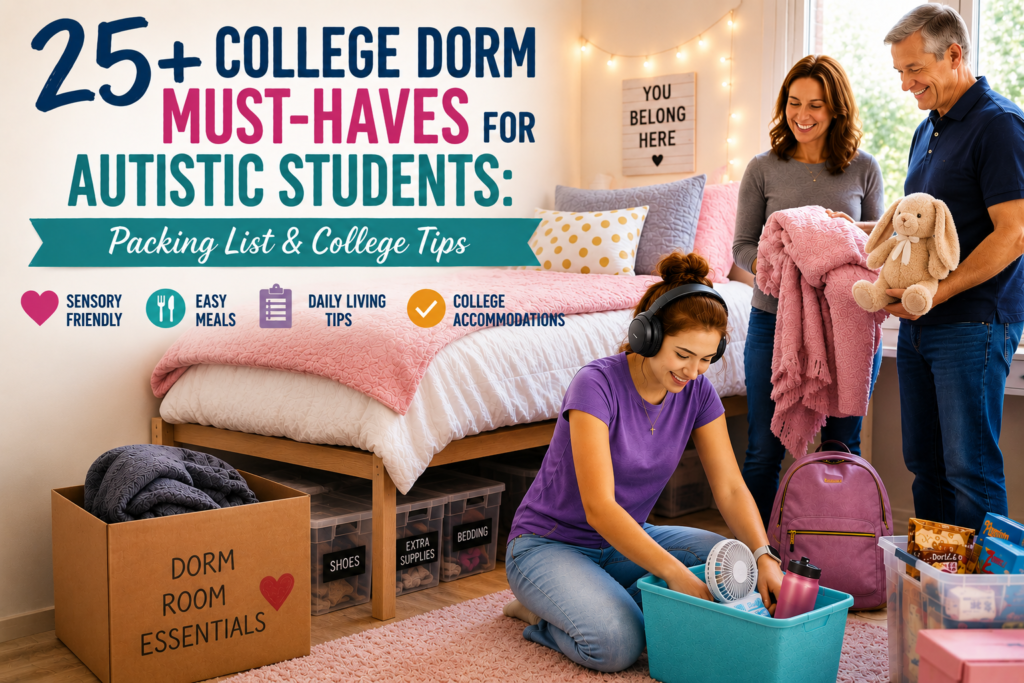
Sending your child off to college comes with a very long list of things to think about. When your student is autistic, that list may look a little different.
Of course, there are the usual college dorm must-haves like bedding, towels, laundry supplies, school supplies, and storage. But there are also the things that can make a dorm room feel safe and comfortable, provide backup options when the dining hall is just too much, and help your student manage daily life more independently.
As both an occupational therapy assistant and the mom of an autistic college student, I learned pretty quickly that the most useful things weren’t always the items on the typical college packing lists.
Think Beyond the Typical College Dorm Checklist
Most college dorm packing lists are filled with things like extra-long twin sheets, shower shoes, a laundry basket, and a desk lamp. You definitely need those things, but I would also think about your individual student and what makes everyday life easier for them.
College adds a lot of new demands all at once. There is a new room, possibly a roommate, unfamiliar foods, different sounds, new people, classes, homework, laundry, and a completely different daily routine.
Your student’s dorm room may become much more than a place to sleep. It can be their place to decompress and recover from everything else happening during the day.
Create a Calming Dorm Room
Dorm rooms aren’t exactly known for being peaceful. There may be people talking in the hallway, doors slamming, music playing, roommates coming and going, and all kinds of unfamiliar sounds.
A few simple items can make the room feel much more comfortable.
Consider packing:
- A fan for white noise and air circulation
- Twinkle lights or string lights instead of relying on harsh overhead lighting
- A weighted blanket if your student already uses and likes one
- Comfortable pillows and familiar bedding
- Noise-reducing or noise-canceling headphones
- A favorite blanket or comfort item from home
- Air purifier
- A small bedside lamp or other softer lighting option
- Familiar sensory or fidget items
- An eye mask for sleeping
- Mattress topper
You don’t need to create a Pinterest-perfect dorm room. The goal is to create a space where your student can shut the door, lower the sensory demands, and recharge.
And definitely check the college’s dorm rules before buying things like string lights, appliances, or other electrical items.
Have a Backup Plan for Food
This was a big one for us.
College meal plans sound wonderful in theory. Your student just walks over to the dining hall, chooses a meal, eats, and goes back to the dorm.
Except sometimes “just going to the dining hall” isn’t simple at all.
The dining hall can mean crowds, noise, smells, unfamiliar foods, waiting in lines, making choices, navigating social situations, and leaving the safety of the dorm when your student is already exhausted.
My daughter probably went to the dining hall only 5 to 10 times a semester. I don’t even want to think about what each of those meals cost when you divide the price of the meal plan by the number of times she actually used it!
That experience taught me that easy dorm food isn’t just a convenience. It can be an important backup plan.
Stock the Dorm With Foods They Will Actually Eat
Don’t worry about what a college student is “supposed” to eat in their dorm. Think about what your student will reliably eat when they’re tired, overwhelmed, or simply can’t get themselves to the dining hall.
For us, having easy options available was important.
Some ideas include:
- Protein drinks
- Protein bars
- Granola bars
- Crackers
- Individual cereal cups
- Shelf-stable snacks
- Applesauce or fruit cups
- Microwave oatmeal
- Microwave rice
- Easy microwave meals
- Soup or pasta cups
- Macaroni and cheese cups
- Ramen
- Other familiar safe foods
If the dorm allows them, a microwave, mini refrigerator, and electric kettle can open up many more possibilities for quick and easy meals.
The goal isn’t to replace balanced meals indefinitely. It’s to make sure your student has something they can eat on the days when getting to the dining hall just isn’t happening.
A protein drink and a granola bar may not look like the perfect college dinner, but sometimes fed is far better than overwhelmed and hungry.

Practice the “Little” Life Skills Before College
College independence involves much more than getting to class.
Before move-in day, think about all the small daily tasks your student will suddenly be responsible for managing.
Can they do laundry? Do they know how much detergent to use? Can they change their sheets? Do they know where to get toiletries when they run out? Can they order food? Do they know how to refill prescriptions if applicable? What happens if they lose their student ID or room key?
These are great things to practice during the summer before college.
You don’t have to teach everything at once. Choose the routines that will matter most during those first few weeks and practice them in the same way your student will need to complete them at school.
Work With Their Natural Schedule When You Can
One thing we learned was that independence doesn’t have to mean doing everything at the same time everyone else does it.
We joke that my daughter is nocturnal, so when it came time to schedule college classes, starting as late in the day as possible was a must. An 8:00 a.m. class might work perfectly well for one student and be a terrible choice for another.
When possible, consider your student’s natural sleep and wake patterns when choosing classes. A schedule that works with them instead of against them can remove one more obstacle from an already demanding day.
The same idea can apply to studying, doing laundry, eating, and even showering. Sometimes changing when a task happens can make the task itself much easier.
Consider the Bathroom Situation
Dorm bathrooms can be another sensory and executive functioning challenge, especially if your student will be using a shared bathroom.
As a freshman, my daughter lived in a dorm with a large shared bathroom. Her solution was pretty simple: she showered late at night when hardly anyone else was using it.
Instead of trying to make herself shower during the busiest times, she figured out when the bathroom was quieter and worked that into her routine. Fewer people meant less noise, less waiting, and a much calmer experience.
If your student is uncomfortable with crowded shared bathrooms, talk about using them during off-hours. Early mornings, later evenings, or other quieter times may make showering much more manageable.
A shower caddy keeps everything together and reduces the number of things they need to remember. Shower shoes, a comfortable robe, quick-drying towels, and duplicate toiletries can also make the routine easier.
If your student is particularly sensitive to shared bathrooms, this is something worth considering when you’re comparing housing options.
Make Routines More Visible
Executive functioning demands increase dramatically in college because so much of the structure provided in high school disappears.
A simple visual system can help.
Your student might benefit from a phone checklist, calendar reminders, alarms, or a small checklist posted inside the dorm.
Instead of one vague reminder to “clean your room,” break it into concrete tasks:
- Take trash out
- Put dirty clothes in hamper
- Wash laundry
- Change sheets
- Restock snacks
- Refill water bottles
- Check toiletries
- Charge devices
- Pack backpack for tomorrow
- Remember to eat
The system doesn’t need to look childish. College students use reminders, calendars, alarms, and checklists all the time.
Don’t Forget Medication and Health Routines
If your student takes medication, college may be the first time they are completely responsible for remembering it every day.
Think about how they will store it, remember to take it, know when it is running low, and request a refill.
Phone alarms and recurring reminders can be extremely helpful. It is also worth making sure your student knows where the campus health center is and what to do if they become sick.
Bring Familiar Things From Home
There is a temptation to buy everything new for college.
New bedding. New towels. New decorations. New dishes.
But familiar can be comforting.
If your student loves a particular blanket, pillow, mug, stuffed animal, or other item, let it come to college.
A dorm room doesn’t have to look like the rooms on social media. It needs to work for the person living there.
Contact Campus Accessibility Services Early
This is one area I would encourage families to look into well before move-in day.
Colleges usually have an Accessibility or Disability Services office that coordinates accommodations for students with documented disabilities. Don’t assume that accommodations are limited to extra time on tests.
Depending on your student’s individual needs, reasonable accommodations might include things such as:
- A single dorm room (This was a must for my daughter who sleeps 3am-11am)
- Access to a private or semi-private bathroom
- Housing accommodations related to sensory needs (Schools often have floors with earlier quiet curfews.
- Dining or meal-plan accommodations, which may include an adjusted meal plan when appropriate ( I wish we had done this 2 years sooner)
- Extended testing time
- A reduced-distraction testing environment
- Flexible attendance or due-date considerations when appropriate
- Assistive technology
- Other individualized academic or housing supports
These aren’t automatically granted because a student is autistic, and what is available will vary by college and by the student’s documented needs. But it is absolutely worth asking.
The college may request documentation from a qualified professional explaining the student’s disability, how it substantially affects them, and why a particular accommodation is needed. Depending on the school’s requirements and the accommodation being requested, that documentation might come from a doctor, psychologist, therapist, or another qualified provider.
Start this process early, especially if you’re requesting housing accommodations. A single room or a particular bathroom setup can make an enormous difference for a student who needs a predictable, lower-sensory place to recover at the end of the day.
And if your student is unlikely to use a traditional unlimited dining plan, ask about that too. After watching my daughter use the dining hall only a handful of times each semester, I certainly wish every family knew to explore their options before paying for a meal plan their student may barely use.
College Accommodations Are Different From a High School 504 Plan
If your student had a 504 Plan or IEP in high school, college accommodations may feel somewhat familiar, but the process changes.
In K-12, the school plays a much larger role in identifying needs and providing supports. In college, the student generally needs to register with Accessibility Services, provide the required documentation, request accommodations, and learn how to use them.
The student also becomes much more involved in communicating their needs.
This makes the transition to college a good time to practice self-advocacy. Your student doesn’t have to explain their entire life story. They do need to become comfortable saying things like, “I have an accommodation for extended testing time. How do I arrange that for our exam?”
If your student already has accommodations that work well, don’t automatically assume they won’t need them in college simply because they’ve become more independent. College removes a lot of the built-in structure of high school at the same time that academic and daily living demands increase.
Get the accommodations in place before they’re desperately needed.
Plan for the Hard Days, Not Just the Good Ones
This may be one of the most important things I learned.
When you’re packing for college, it’s easy to imagine the good days. Your student wakes up, goes to class, meets friends for lunch, studies at the library, eats dinner in the dining hall, and comes back to their dorm.
But prepare for the days when that isn’t happening.
What can they eat if they can’t make it to the dining hall?
How can they make their room quieter if they’re overwhelmed?
Could they shower later when the bathroom is empty?
Can classes be scheduled later in the day if mornings are particularly difficult?
Who can they contact if they’re struggling?
What happens if they miss a class?
How will they get clean clothes if laundry has piled up?
Having a backup plan doesn’t mean you’re expecting your student to fail. You’re recognizing that independence can look different for different students. Sometimes success comes from changing the environment, changing the schedule, or finding a different way to accomplish the same thing.
College Dorm Must-Haves for Autistic Students
A College Dorm Must-Have List can help students and families prepare for move-in day without forgetting the little things that make daily life easier. Along with bedding, bathroom essentials, school supplies, organization, and laundry items, consider sensory supports, familiar comfort items, easy foods, protein drinks and bars, microwave meals, and tools that support routines and executive functioning.
But don’t stop at the packing list. The right accommodations may be just as important as anything you put in the car on move-in day.
The best college preparation isn’t necessarily about getting your student to do everything the way everyone else does.
It’s about figuring out what helps your student eat, sleep, regulate, learn, get organized, recover after a long day, and successfully navigate college life.
A single room, a late shower, an afternoon class, extra time on an exam, dinner from the microwave, or an evening spent decompressing in their dorm might not look like the stereotypical college experience.
That’s okay. The goal is to help them build a college experience that actually works for them.
This post includes affiliate links. If you click a link and make a purchase, I may receive a small fee at no cost to you.

About the Author
I am a Certified Occupational Therapy Assistant (COTA) and have been working in a public school system for more than 25 years. My resources can be found on TPT, BOOM Learning, Made by Teachers, Classful, and Your Therapy Source. I appreciate your interest, wherever you wish to shop.
I also now have workbooks on Amazon.
My mission is to help you find creative ideas to incorporate fine motor, visual perception, gross motor, and social-emotional learning into your lessons.
I hope you consider signing up for my Free Resource Library with your Email. I send out emails about once a week and share resources, tips, and planning ideas for your classroom or occupational therapy needs. Hopefully, these help your students work on building their skills in a fun and engaging way.
Thank you for your interest in my resources and ideas. I hope you will consider following my journey on TPT or wherever you wish to shop.