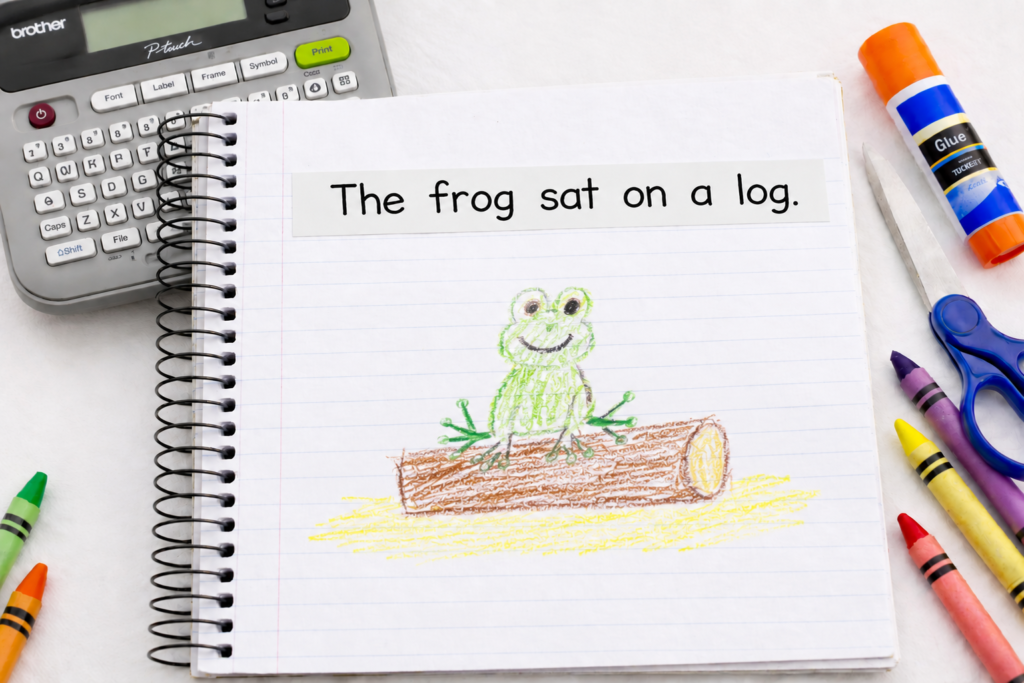
For many years, writing instruction has often started with one assumption: every child should begin with a pencil.
But what happens when holding a pencil becomes the biggest barrier to showing what a student knows?
That’s where alternative pencils come in.
Alternative pencils give students another way to generate text so they can participate in meaningful literacy activities while continuing to develop handwriting skills. Instead of waiting until handwriting catches up, students can begin seeing themselves as writers today.
What Is an Alternative Pencil?
An alternative pencil is any tool that allows a student to create words, sentences, or stories without relying on a traditional pencil.
Some common examples include:
- Magnet letters
- Label makers
- Letter stamps
- Address labels
- Keyboards
- iPads or Chromebooks
- AAC devices
- Voice-to-text
- Dry erase locker magnets
- and more
The goal isn’t to replace handwriting. It’s to give students another path to communication.
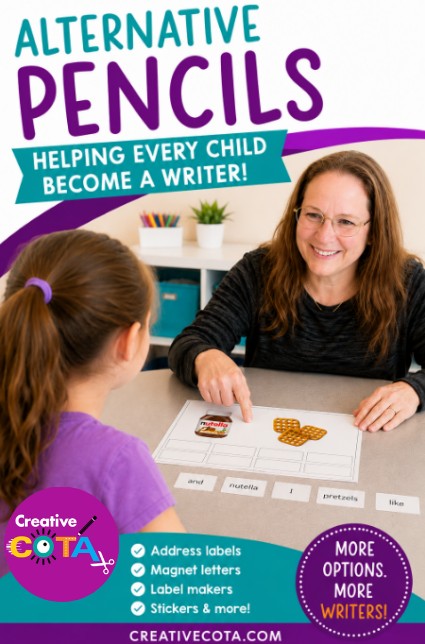
Why Use Alternative Pencils?
Writing requires much more than forming letters.
Students also have to think of ideas, organize their thoughts, spell words, remember letter formation, and physically produce the writing. For some learners, that’s simply too much to do all at once.
Alternative pencils reduce the motor demands so students can focus on communicating their ideas.
Who Benefits?
Alternative pencils can support many different learners, including:
- Students with autism
- AAC users
- Students with dysgraphia
- Children with fine motor challenges
- Students with cerebral palsy
- Emerging writers
- Reluctant writers
- Students who fatigue quickly when writing
Every student deserves access to literacy, even if they don’t use a traditional pencil.
Handwriting vs. Writing
One of the biggest mindset shifts is recognizing that handwriting and writing are not the same skill.
Handwriting is how we produce letters.
Writing is how we communicate ideas.
When we separate those two skills, we create more opportunities for students to participate while still supporting handwriting development.
How Do You Get Started?
The good news is you don’t need expensive technology.
Many of my favorite alternative pencils are inexpensive, easy to use, and can be added to literacy activities you already have.
Often, the biggest challenge isn’t finding the tools. It’s knowing which tool to use, when to introduce it, and how to make it meaningful for each student.
Want Practical Ideas You Can Use Tomorrow?
If you’ve ever wondered:
- Which alternative pencil should I start with?
- How do I know which students need one?
- What activities actually work?
- How do I write IEP goals?
- How can I encourage classroom teachers to use them?
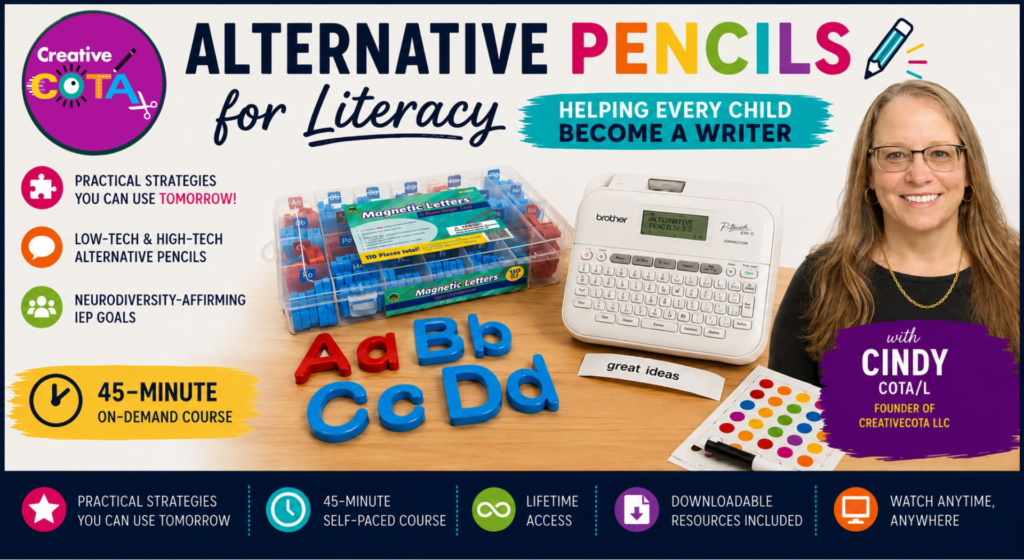
I created Alternative Pencils for Literacy: Helping Every Child Become a Writer to answer those questions.
Inside this practical mini course, you’ll learn:
- The “why” behind alternative pencils
- Low-tech and digital options
- Real examples from my therapy sessions
- Classroom activities that work with almost any alternative pencil
- IEP goal ideas using “generate text”
- Printable planning guides and free downloads
What Can Students Do with Alternative Pencils?
One of the biggest surprises for many educators is that you don’t need special worksheets.
Alternative pencils work beautifully with activities you may already use, including:
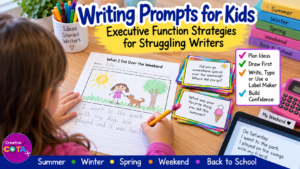
- Picture writing prompts
- Sentence building
- Story starters
- Labeling pictures
- Sight word practice
- Opinion writing
- Vocabulary activities
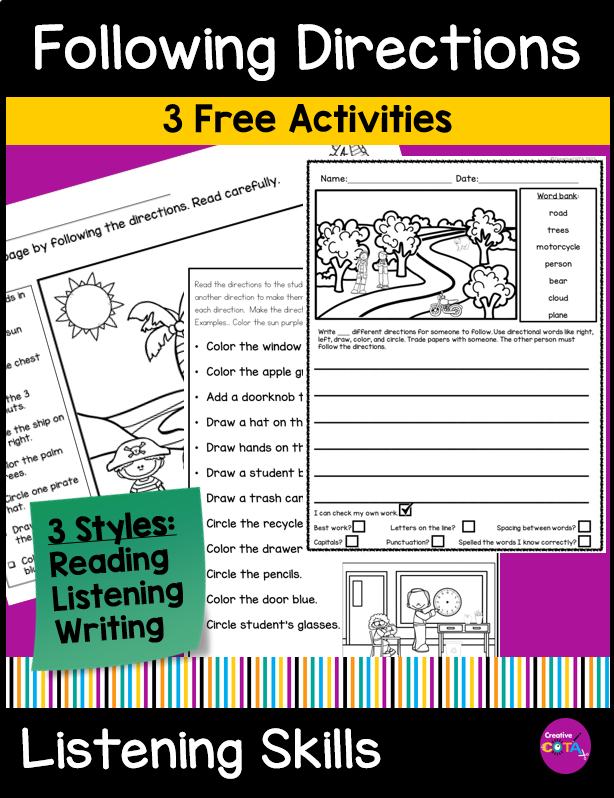
- Following directions
The writing activity stays the same.
Only the writing tool changes.
A Small Change That Made a Big Difference
Several years ago, our occupational therapy department began changing one word in many of our IEP goals.
Instead of saying students would write, we began saying they would generate text.
That simple change opened the door for many students to demonstrate what they knew using the writing tool that worked best for them.
Sometimes one small change can make a huge difference.
You Don’t Have to Figure It Out Alone
If you’re curious about alternative pencils but aren’t sure where to begin, you’re not alone.
Whether you’re an occupational therapist, speech-language pathologist, special educator, classroom teacher, or parent, learning how to match the right tool with the right student can completely change how writing looks in your classroom.
The best part?
Many of these ideas are simple, inexpensive, and can be implemented the very next day.
Every child deserves the opportunity to become a writer. Sometimes they simply need a different pencil.
About the Author
I am a Certified Occupational Therapy Assistant (COTA) and have been working in a public school system for more than 28 years. My resources can be found on TPT, BOOM Learning, Made by Teachers, Classful, and Your Therapy Source. I appreciate your interest, wherever you wish to shop.
I also now have workbooks on Amazon.
My mission is to help you find creative ideas to incorporate fine motor, visual perception, gross motor, and social-emotional learning into your lessons.
I hope you consider signing up for my Free Resource Library with your Email. I send out emails about once a week and share resources, tips, and planning ideas for your classroom or occupational therapy needs. Hopefully, these help your students work on building their skills in a fun and engaging way.
Thank you for your interest in my resources and ideas. I hope you will consider following my journey on TPT or wherever you wish to shop.