If you’ve ever watched a student stare at a blank page during writing time, you know that getting started is often the hardest part. For many children, especially in kindergarten through second grade, coming up with an idea is much more challenging than writing the words.
One simple strategy can make a huge difference: picture prompts. Instead of asking students to invent an idea from scratch, a picture gives them something concrete to observe, imagine, and talk about. Suddenly, they have somewhere to begin.
Why Picture Prompts Work
Not every child can easily create pictures in their mind. Visual imagery is connected to executive functioning and working memory, which are still developing in many young learners.
Ask one student to “Write about your weekend,” and they immediately begin writing about a birthday party or a trip to the park. Another student may have no idea where to start.
A picture removes that first hurdle. Students can look closely, notice details, make predictions, describe what they see, and begin telling a story one sentence at a time.
Occupational Therapy Strategies to Support Writing
Use Real Photos
One of my favorite occupational therapy strategies is encouraging families to take pictures during weekend activities or special events.
When students bring those photos to school, they become wonderful journal prompts. A simple picture helps students remember who was there, what happened, how they felt, and details they may have otherwise forgotten.
Those visual reminders often lead to longer, more meaningful writing.
Draw the Story First
Some students organize their ideas much more easily when they can see them.
As students tell you about an experience, quickly sketch simple stick figures or basic scenes. This isn’t an art lesson, it’s simply giving their ideas a visual home. Many of my students have carried these simple drawings back to class and used them to write complete journal entries.
One teacher came running down to my therapy room after a writing lesson because a student had written more independently from one of these simple sketches than he had in months.
Sometimes all students need is a way to “see” their story.
Reduce the Cognitive Load
Writing asks children to manage a lot at once:
- Thinking of ideas
- Organizing thoughts
- Remembering letter formation
- Spelling words
- Using punctuation
- Keeping their place on the page
For many students, that’s overwhelming.
If spelling is also a goal, let students help stretch out words while an adult records the spelling nearby. This allows children to focus on generating ideas without feeling like every skill has to happen perfectly at the same time.
Ready-to-Use Picture Prompts Save Time
Over the years, I found myself constantly searching for interesting photographs and creating new writing picture prompts for my students.
Eventually, I decided to create my own.
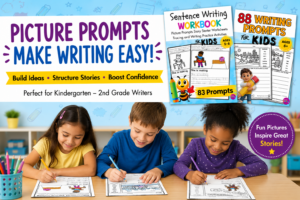
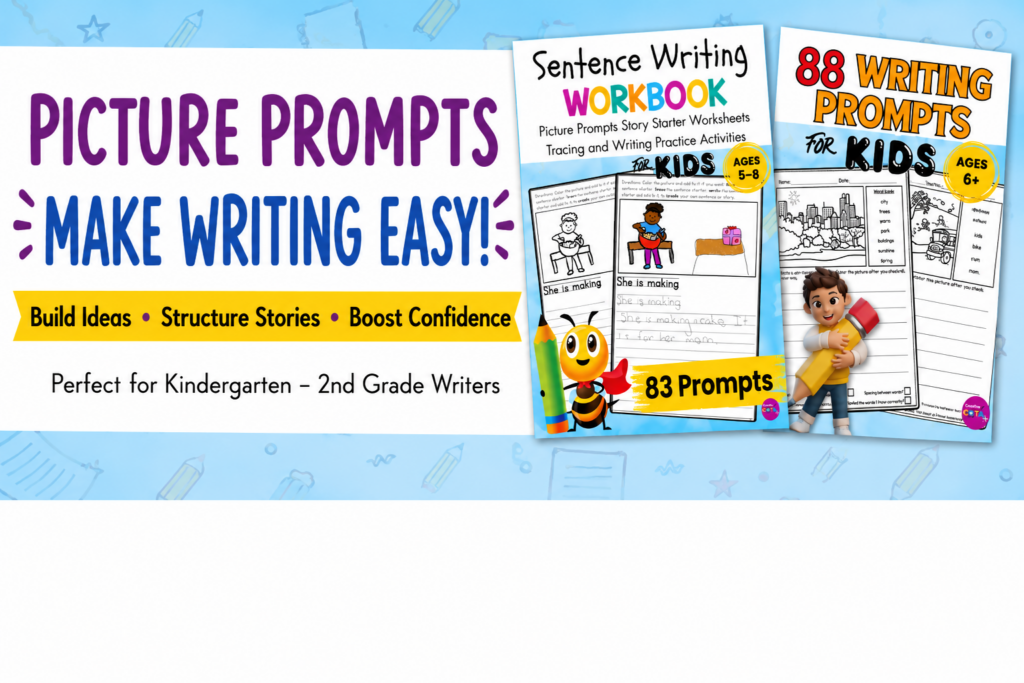
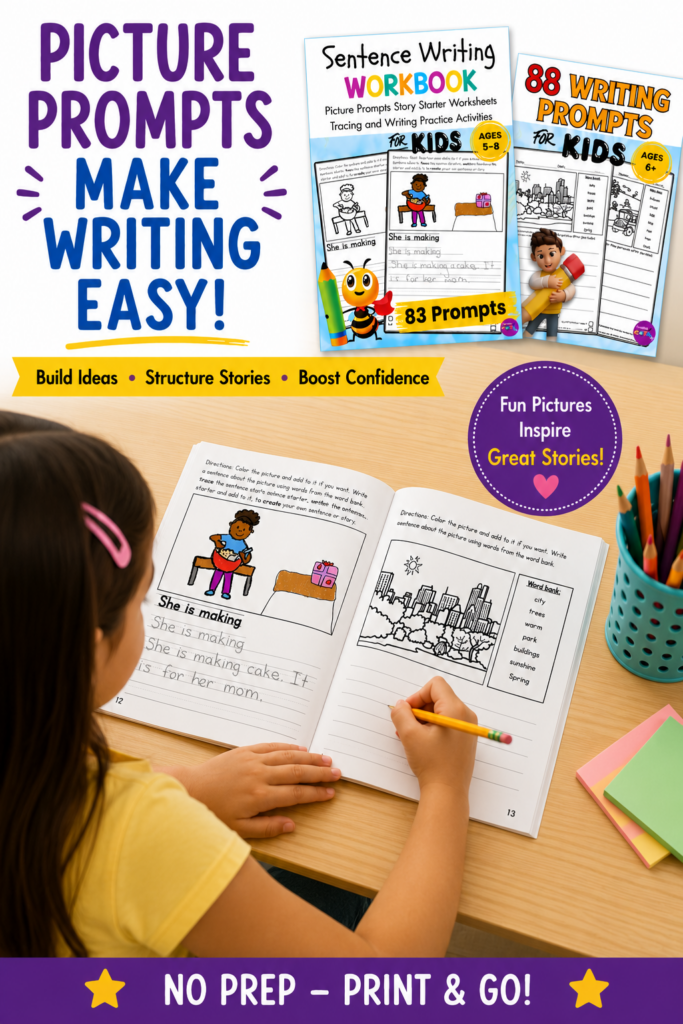
My Creative Writing Prompt Workbooks include dozens of engaging picture prompts paired with simple word banks and writing space to help students move from “I don’t know what to write” to confidently writing sentences and short stories.
They’re designed to reduce preparation time for teachers while giving students the visual support they need to become more successful writers.
They’re perfect for:
- Morning work
- Writing centers
- Occupational therapy
- Small groups
- Early finishers
- Homeschool
- Summer learning
- Independent writing practice
Because each page begins with an engaging picture, students can spend less time searching for ideas and more time actually writing.
Other Great Sources for Picture Prompts
You don’t always need a workbook to get started. Try using:
- Family photographs
- Picture books
- Magazine pictures
- Postcards
- Nature photographs
- Seasonal clip art
- Classroom event photos
- Trading cards
- Animal pictures
Any interesting image can become the beginning of a story.
But if you’d like a ready-to-use collection that’s organized and printable, my Creative Writing Prompt Workbooks were created to do exactly that. Simply open the book, choose a page, and let the pictures inspire your students’ imaginations. They make writing practice simple, engaging, and much less intimidating for reluctant writers.

About the Author
I am a Certified Occupational Therapy Assistant (COTA) and have been working in a public school system for more than 25 years. My resources can be found on TPT, BOOM Learning, Made by Teachers, Classful, and Your Therapy Source. I appreciate your interest, wherever you wish to shop.
I also now have workbooks on Amazon.
My mission is to help you find creative ideas to incorporate fine motor, visual perception, gross motor, and social-emotional learning into your lessons.
I hope you consider signing up for my Free Resource Library with your Email. I send out emails about once a week and share resources, tips, and planning ideas for your classroom or occupational therapy needs. Hopefully, these help your students work on building their skills in a fun and engaging way.
Thank you for your interest in my resources and ideas. I hope you will consider following my journey on TPT or wherever you wish to shop.