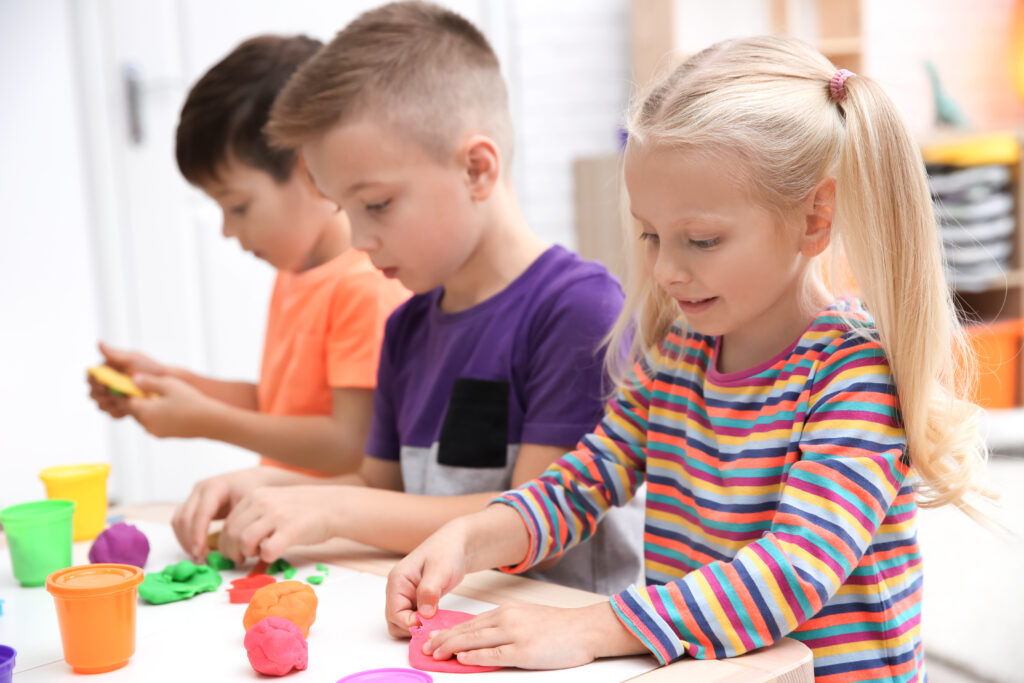
Playdough is an accessible and effective tool that can support your child’s early development across a range of essential skills. Through a series of simple, engaging activities, you can use playdough to foster fine motor abilities, sensory exploration, early literacy, and math skills in a fun, hands-on way. Whether it’s rolling, pinching, or shaping, playdough exercises can help lay the groundwork for foundational academic and physical skills.
Playdough Activities to Support Development
Fine Motor Skills
Working with playdough can improve hand strength, coordination, and dexterity:
- Cookie Cutters: Use cookie cutters to make shapes, encouraging controlled hand movements.
- Rolling and Pinching: Roll playdough into small balls or pinch pieces to strengthen fingers, particularly the pincer grasp, which is important for writing.
Hand Strength and Coordination
Activities that use both hands are valuable for strengthening muscles and improving coordination:
- Rolling Pin: Roll out playdough to build hand strength.
- Ropes and Scissors: Form ropes and practice cutting them with scissors, which encourages bilateral coordination.
Sensory Exploration
Playdough provides a natural sensory experience that can help children become more comfortable with different textures:
- Hidden Objects: Embed small items like beads or buttons in the playdough for tactile exploration.
- Make playdoh with kids: Check out the recipe below
Color and Shape Recognition
Playdough can help children practice sorting, color identification, and pattern recognition:
- Color Sorting: Organize different colors of playdough into containers.
- Shape Making: Create basic shapes like circles and triangles, discussing their attributes as you go.
Math Skills
Playdough can be a hands-on tool for introducing basic math concepts:
- Counting and Groups: Roll playdough into balls and count them or use them for simple addition and subtraction.
- Measurement: Make playdoh with students
Language and Social Skills
Working with playdough can also support language development and social interaction:
- Labeling and Describing: Label colors, shapes, and actions to enhance vocabulary.
- Turn-Taking: Encourage sharing and taking turns during activities, which is great for developing social skills.
Letter Formation and Early Literacy
Using playdough to practice letter shapes can help children with letter recognition:
- Letter Shapes: Roll playdough into “snakes” and shape them into letters.
- Spelling Practice: Form letters to spell simple words, supporting early spelling skills.
Emotional Regulation
Playdough can also be a calming activity, providing children with a way to manage stress:
- Mindfulness: Encourage children to focus on the sensation of rolling and molding the playdough as a calming exercise.
- Calming: Add scents or warm up playdoh
Therapeutic Benefits of Playdough Activities
From strengthening fine motor skills to supporting sensory and cognitive growth, playdough is a valuable, multi-functional tool. It is great for a range of therapeutic and educational purposes, supporting everything from early literacy to social skills in a hands-on, child-friendly way. Playdough can be used in occupational therapy, classroom settings, or at home to support foundational skills and developmental milestones.
Simple No-Cook Playdough Recipe
Here’s a simple, no-cook playdough recipe that only requires a few basic ingredients:
Ingredients
- 2 cups all-purpose flour
- 1 cup salt
- 1 cup cold water
- 1 tablespoon vegetable oil (or any cooking oil)
- Food coloring (optional)
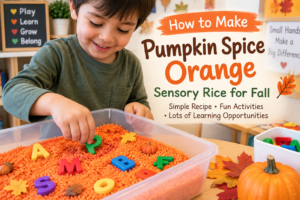
- A few drops of essential oil (optional, for scent) Pumpkin spice in the fall, and peppermint for Christmas are fun additions.
Instructions
- Mix Dry Ingredients: In a large mixing bowl, combine the flour and salt. Stir until well-blended.
- Add Oil and Water: Pour in the vegetable oil and about ¾ of the water. Stir well to start forming a dough.
- Adjust Texture: Gradually add the remaining water until the dough reaches a soft, pliable consistency. If it’s too sticky, add a bit more flour; if it’s too dry, add a few drops of water.
- Add Color and Scent: If you want colored playdough, divide the dough into sections and add a few drops of food coloring to each, kneading it in until the color is uniform. Add essential oils for scent if desired.
- Knead: Knead the dough for a few minutes until it’s smooth and ready to play with!
Storage
Store the playdough in an airtight container or plastic bag. It should last up to a week when sealed properly. If it starts to dry out, add a few drops of water and knead it back to a soft consistency.
This no-cook recipe is quick, safe for kids, and great for a variety of sensory play and fine motor activities!
About The Author:
I am a Certified Occupational Therapy Assistant (COTA) and have been working in a public school system for more than 25 years. My resources can be found on TPT, BOOM Learning, Made by Teachers, Classful, and Your Therapy Source. I appreciate your interest wherever you wish to shop.
My mission is to help you find creative ideas to incorporate fine motor, visual perception, gross motor, and social-emotional learning into your lessons.
I hope you consider signing up for my Free Resource Library with your Email. I send out emails about once a week and share resources, tips, and planning ideas for your classroom or occupational therapy needs. Hopefully, these help your students work on building their skills in a fun and engaging way.